
Aston Martin Zagato History
The Aston Martin Zagato partnership is one of the longest-running and most celebrated collaborations in automotive history. Since 1960, these two iconic marques – one British, one Italian – have produced some of the rarest, most collectible, and most visually striking automobiles ever built. From the immortal DB4 GT Zagato to the limited-edition DBZ Centenary Collection, every car born from this union carries a story worth telling.
The Origins of the Aston Martin and Zagato Partnership
The Aston Martin and Zagato collaboration traces its origins to the 1960 Geneva Motor Show, where Aston Martin Technical Director John Wyer met Gianni Zagato and struck the agreement that would change both companies’ legacies. Aston Martin was locked in a fierce racing rivalry with Ferrari for supremacy in the World Sports Car Championship, and company boss David Brown needed the DB4 GT to be lighter and more aerodynamically efficient to challenge the dominant Ferrari 250 GTO.
The solution was to ship DB4 GT chassis from Newport Pagnell to Zagato’s Milan workshop, where a 23-year-old designer named Ercole Spada – barely a year into his career – would create an entirely new body. It was his first assignment at Zagato, and it became his greatest work.
Aston Martin DB4 GT Zagato (1960-1963): Where the Legend Begins
Unveiled at the London Motor Show in October 1960, the Aston Martin DB4 GT Zagato was an immediate sensation. Spada hand-formed a lighter, shorter, more aerodynamic aluminium body over the DB4 GT chassis, using Perspex glass and thinner panels to shed over 100 pounds versus the standard car. Power came from a twin-plug, Weber-carbureted inline-six producing 314 hp, giving the car a top speed of 153 mph.
Only 19 original examples were completed – all of which survive today – making the DB4 GT Zagato significantly rarer than the Ferrari GTO it was designed to beat. The car competed at Le Mans in 1961 and 1962, and its Spada-penned bodywork is widely regarded as one of the most beautiful designs in automotive history. Today, examples average approximately £6.7 million at auction, with the highest recorded sale exceeding £10 million.
Aston Martin V8 Vantage Zagato (1986-1990): The Revival
After more than two decades, the Aston Martin Zagato partnership was revived in the mid-1980s. Aston Martin Chairman Victor Gauntlett approached Zagato with a bold proposition: build the ultimate version of the fearsome V8 Vantage.
The Aston Martin V8 Vantage Zagato Coupé, first shown at the 1986 Geneva Motor Show, featured a lighter, shorter body with flush-fitting glass, NACA duct induction, and underfloor aerodynamics. Its “X Pack” 5.3L quad-cam V8 produced 432 bhp and propelled the car to a verified 185.8 mph – briefly making it the fastest production car in the world. All 50 planned coupés sold out before production began. By 1990, 52 Coupés and 37 Volante convertibles had been built – 89 Aston Martin V8 Zagato cars in total.
Aston Martin DB7 Zagato and DB AR1 (2002-2004)
The Aston Martin Zagato collaboration was renewed in the early 2000s, reportedly sparked by a conversation between Aston Martin CEO Ulrich Bez and Andrea Zagato at the 2001 Pebble Beach Concours d’Élégance.
The Aston Martin DB7 Zagato was launched at the 2002 Paris Salon – a 440 bhp, 186 mph coupé limited to 99 examples, all pre-sold at a 3:1 demand-to-supply ratio before the car was even publicly shown. American buyers, excluded by homologation rules, received their own companion: the DB AR1 Zagato (American Roadster 1), a fully open roadster powered by the Vanquish V12, also limited to 99 examples and reportedly sold out in just three weeks. Both cars featured Zagato’s signature double-bubble roof and hand-formed coachwork.
Aston Martin V12 Zagato (2011-2012): Celebrating 50 Years
In May 2011, Aston Martin and Zagato unveiled the Aston Martin V12 Zagato at the Concorso d’Eleganza Villa d’Este in Lake Como – a car conceived specifically to mark the 50th anniversary of the DB4 GT Zagato. It immediately won the event’s prestigious “Design Award for Concept Cars and Prototypes”.
Built on the V12 Vantage platform with 510 bhp, each V12 Zagato required approximately 2,000 man-hours to complete from aluminum and carbon fiber. A total of 150 road cars were produced, and the car also competed at the Nürburgring 24 Hours in 2011, honoring the original DB4 GT Zagato’s motorsport heritage.
Aston Martin Vanquish Zagato (2016-2019): Four Body Styles
In 2016, Aston Martin unveiled the Vanquish Zagato Concept at Villa d’Este – the most ambitious Aston Martin Zagato project ever undertaken. It evolved into a complete family of four body styles, all powered by a naturally aspirated 600 PS V12:
- Vanquish Zagato Coupé – 99 examples
- Vanquish Zagato Volante – 99 examples
- Vanquish Zagato Speedster – 28 examples
- Vanquish Zagato Shooting Brake – 99 examples
Total production across all four Vanquish Zagato variants: just 325 cars worldwide. Every car was pre-sold, with the Speedster selling out the moment it was announced.
DBZ Centenary Collection (2019) and Heritage Twins (2020)
To celebrate Zagato’s centenary in 2019, Aston Martin created the DBZ Centenary Collection – a matched pair consisting of the DBS GT Zagato (760 bhp, featuring the world’s first 3D-printed configurable interior) and the DB4 GT Zagato Continuation, a track-only hand-built recreation requiring 4,500 hours of labor per car. Only 19 pairs were offered – available exclusively as a set and priced at £6 million – making them the most expensive new sports cars Aston Martin had ever sold at the time.
In 2020, specialist firm R-Reforged produced the Aston Martin V12 Zagato Heritage Twins under Aston Martin license and with Zagato’s direct creative involvement: 19 matched pairs of a Coupé and Speedster, each with a carbon fiber body, active aerodynamics, and a reworked naturally aspirated V12 producing 600 bhp – priced at £1.75 million per pair.
The Future of Aston Martin Zagato Collaborations
As of mid-2026, no new Aston Martin Zagato collaboration has been officially confirmed. However, the conditions have rarely been stronger. Aston Martin recently launched the new Vanquish – an 824-835 hp twin-turbo V12 flagship – the exact type of prestige platform that has historically inspired every major Aston Martin Zagato project. The matched-pairs formula proven by the DBZ Collection offers a clear template. And with Andrea Zagato continuing to lead the design house into its second century, the personal and generational commitment to the partnership remains as strong as ever.
The collector market, meanwhile, continues to validate the collaboration’s legacy. DB4 GT Zagato values now average approximately £6.7 million, and every Aston Martin Zagato variant commands meaningful premiums over its standard-production counterpart. For serious collectors, these cars are not simply rare automobiles – they are the living chapters of one of the great creative stories in automotive history.
That story began with a handshake in Geneva, 19 hand-built racing cars, and a 23-year-old Italian designer named Ercole Spada – who passed away in August 2025 at the age of 88, leaving behind a legacy as enduring as the cars he shaped.
Spotlight: A Legendary DB4 GT Zagato Heads to RM Sotheby's Monterey
One of the most celebrated DB4 GT Zagatos in existence is set to cross the auction block at RM Sotheby’s Monterey Auction, August 13-15, 2026. Chassis 0186/R – understood to be the 14th car built by date – carries a pre-sale estimate of $12,000,000 – $15,000,000 USD, reflecting both its extraordinary condition and its remarkable documented history.
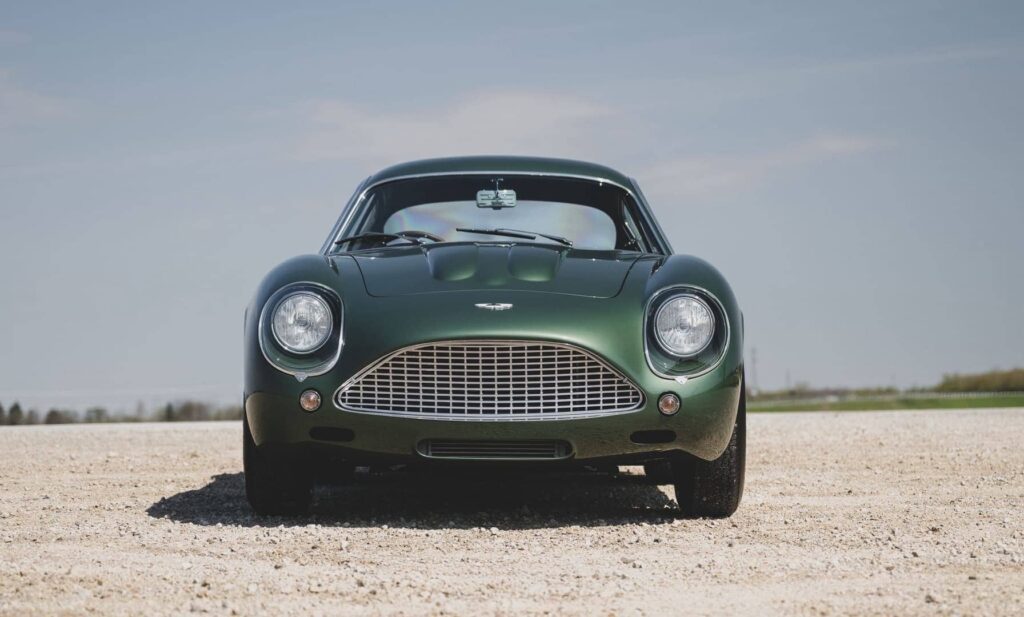
The car’s show career alone places it among the most decorated Aston Martin Zagatos ever presented to the public. Following a comprehensive refurbishment after 2002, it was named Best of Show at the Louis Vuitton Concours d’Elegance that same year. Five years later, it earned Best in Class at the 2007 Concorso d’Eleganza Villa d’Este – the same prestigious Lake Como event where the V12 Zagato would later make its world debut. Its finest competitive hour came at the 2019 Pebble Beach Concours d’Elegance, where it won its class in the special Zagato Centennial Postwar category, took the Vitesse – Elegance Trophy, and was named one of just four finalists for the coveted Best of Show award.
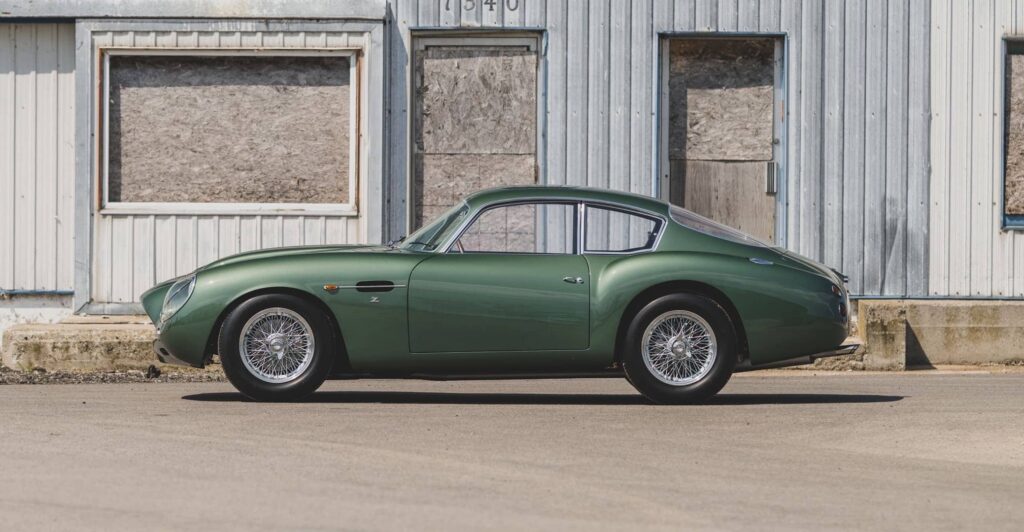
Beyond its concours achievements, chassis 0186/R earned its stripes in period competition during the 1962 Australian sports car season, giving it a genuine racing provenance that many show cars cannot claim. It retains its matching-numbers engine and wears predominantly original Zagato bodywork, while benefiting from a fastidious refurbishment completed between 2016 and 2020 by California-based Aston Martin specialist Kevin Kay Restorations. The car is offered with a restored original owner’s manual, factory build records, period racing documentation, and a production certificate from the British Motor Industry Heritage Trust.
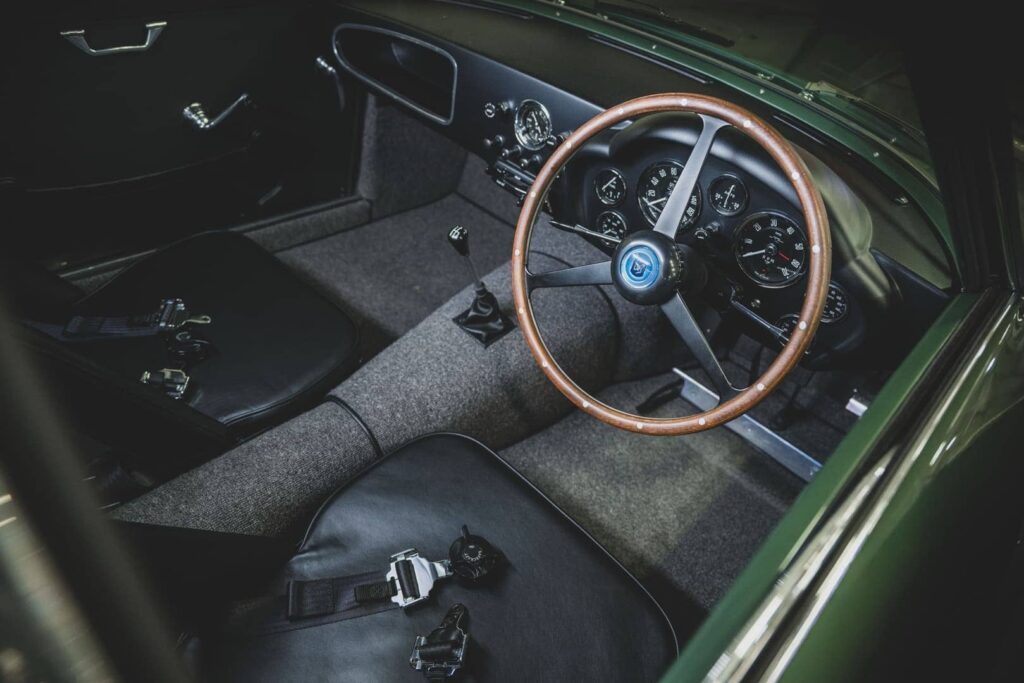
For collectors seeking a DB4 GT Zagato that combines authentic racing history, multiple concours triumphs, and a Pebble Beach-awarded restoration, chassis 0186/R represents one of the most complete and compelling examples likely to appear at public auction in years.
Frequently Asked Questions About Aston Martin Zagato
What is the rarest Aston Martin Zagato?
The Vanquish Zagato Speedster is the rarest series-production model, with only 28 examples built.
What is the most valuable Aston Martin Zagato?
The original DB4 GT Zagato – averaging approximately £6.7 million at auction, with the record sale exceeding £10 million.
How many Aston Martin Zagato cars were made in total?
Across all confirmed models and variants, approximately 850+ cars have been produced through the Aston Martin and Zagato partnership since 1960.
What is the Zagato double-bubble roof?
A signature Zagato design feature – two dome-shaped sections built into the roofline, originally designed to accommodate racing helmets – that appears on virtually every Aston Martin Zagato model.