
McLaren F1 Value Over Time
The McLaren F1 stands as perhaps the most compelling investment in the collector car market over the past decade. What Gordon Murray conceived as the ultimate road car in the early 1990s has transformed into a financial asset of remarkable potency, with auction prices climbing from single-digit millions to figures that rival old master paintings and trophy real estate. For collectors weighing their next significant acquisition, understanding both the trajectory of F1 values and the forces that will shape future pricing is essential.
Supercar to Blue-Chip Asset
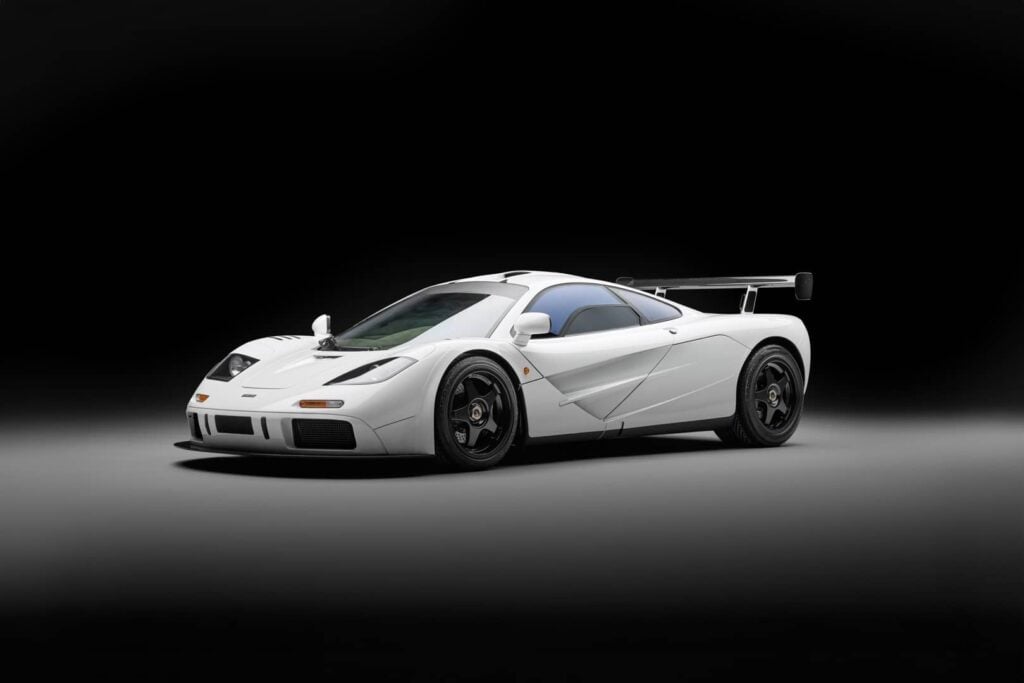
When McLaren stopped production of the F1 in 1998, the car was already recognized as an engineering masterpiece. Yet its investment potential remained largely unrealized. Early secondhand examples traded for figures close to – or even below – their original sticker price of approximately $1 million. The transformation into a stratospheric collectible has been a phenomenon of the past fifteen years, with the most dramatic appreciation occurring in the last decade.
In 2013, a 1997 road-specification F1 sold for $8.47 million at Gooding & Company’s Pebble Beach auction, establishing a benchmark for the modern market. Within two years, an LM-specification example reached $13.75 million at RM Sotheby’s Monterey sale, representing a 62% increase from the 2013 result. By 2017, a standard road car commanded $15.62 million at Bonhams Quail Lodge, and just two years later, an LM-spec car pushed through the $19 million barrier at RM Sotheby’s.
Until December 2025 the auction record had been established in August 2021 when chassis 029 – a virtually untouched 1995 example with just 243 miles on its odometer – sold for $20.465 million at Gooding & Company’s Pebble Beach auction. This extraordinary result reflected not merely the car’s mechanical perfection but its status as a time capsule, finished in the unique Creighton Brown exterior and accompanied by its original FACOM tool chest, fitted luggage, titanium tool kit, and matching TAG Heuer watch. The car had spent most of its existence sequestered in a private Japanese collection, emerging as perhaps the most original F1 in existence.
Between 2013 and 2021, McLaren F1 values appreciated approximately 141%, representing a compound annual growth rate of nearly 12% – a performance that outstripped most traditional investment vehicles over the same period. For context, the S&P 500 returned approximately 16% annually during this exceptionally strong bull market, but few tangible assets delivered such consistent appreciation while offering the visceral pleasures of ownership.
Current McLaren F1 Market
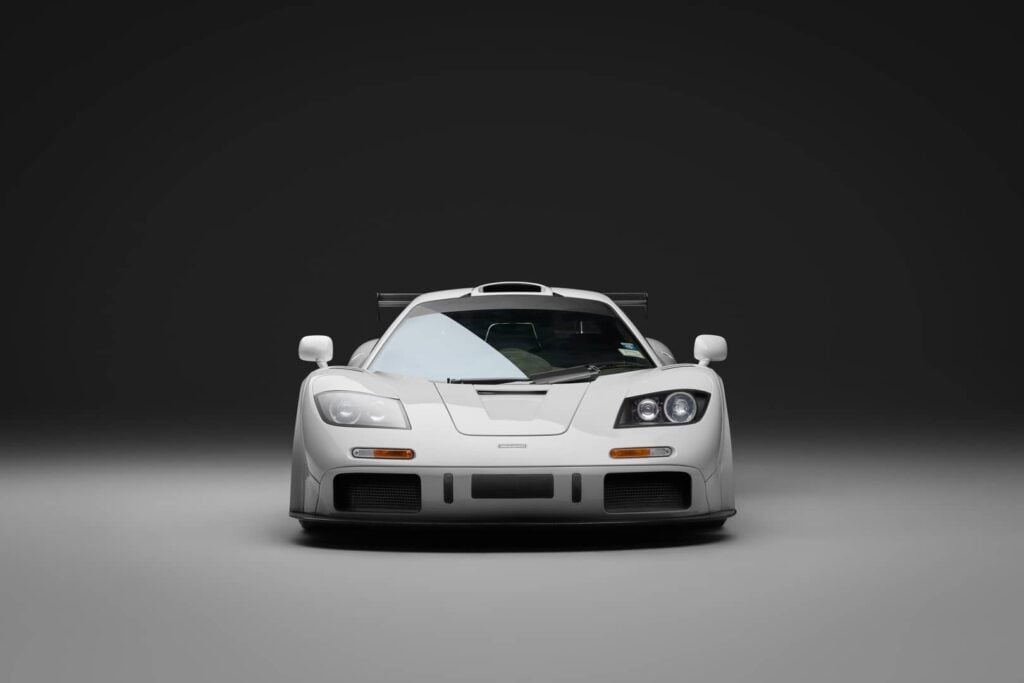
Recent activity suggests the market has not yet reached equilibrium. The record-breaking chassis 029 returned to market in May 2024 through Sotheby’s Sealed, with expectations exceeding $20 million. In August 2025, chassis 062 – originally delivered new to Oracle founder Larry Ellison – was offered through RM Sotheby’s Sealed with an estimate of at least $23 million. This California-registered example, one of only seven F1s originally imported to the United States, has passed through just three prominent owners and benefits from comprehensive McLaren Special Operations upgrades.
McLaren F1s in good condition are estimated to be worth around $21 million, with exceptional examples commanding premiums above that figure. Private sales, which constitute the majority of F1 transactions, reportedly occur at or above these benchmarks, suggesting that public auction results represent floors rather than ceilings.
Why Values Continue to Rise
The McLaren F1’s appreciation rests on foundations that show no signs of weakening.
Scarcity
McLaren produced just 106 examples between 1992 and 1998, with only 64 completed to standard road-car specification. Unlike Ferrari or Porsche, which have occasionally leveraged their heritage to produce continuation vehicles, McLaren has shown no inclination to dilute the F1’s exclusivity. Each car that enters a museum collection or passes to an owner with no intention of selling further constricts an already minuscule supply.
Unmatched Performance
Nearly three decades after Andy Wallace piloted chassis 029 to 240.1 mph at Volkswagen’s Ehra-Lessien test track, the F1 remains the fastest naturally aspirated production car ever built. This record, once assumed to be temporary, has proven permanent – a testament to the car’s exceptional aerodynamics and the relentless pursuit of lightness that defined its engineering. The unlikely victory at the 1995 24 Hours of Le Mans, where a modified F1 GTR defeated purpose-built prototypes, further elevates the car’s status among serious collectors who prize racing provenance.
Cultural Significance
The F1 has transcended the collector car market to become a broader cultural icon, referenced in music, film, and digital media. Its central driving position, dihedral doors, and gold-lined engine bay remain instantly recognizable even to audiences with no particular interest in automobiles. This visibility sustains demand from new generations of collectors who encountered the car through media rather than contemporary ownership.
New Gordon Murray Cars
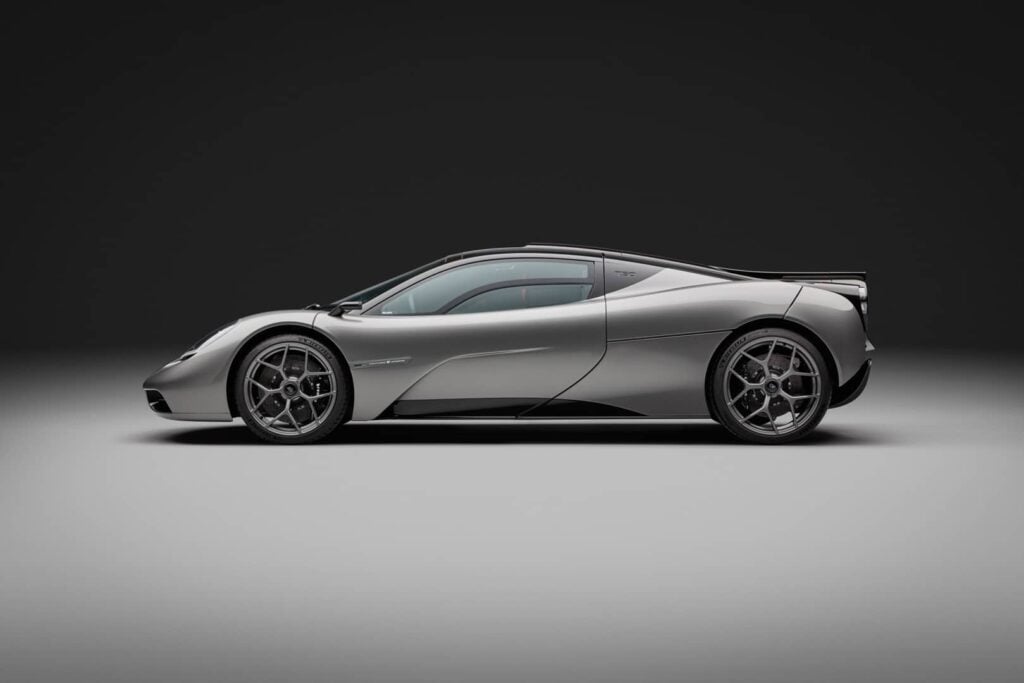
The GMA T.50 has served as a reminder as to the significance of the F1. The direct lineage between the two cars – shared design philosophy, central seating position, naturally aspirated V12, manual transmission – has sparked renewed interest in Murray’s earlier masterwork. Collectors who were not able to get a T.50 allocation often turn their attention to the F1, while those who have secured a T.50 will seek an F1 to complete the pairing.
Challenges and Considerations
No investment is without risk, and the McLaren F1 presents several considerations that prospective buyers should weigh carefully.
Complex Maintenance
The F1 requires specialist attention that few facilities can provide, with major services commanding six-figure sums. Parts availability, while supported by McLaren Special Operations, presents occasional challenges for a car that was never produced in volume. These carrying costs, while modest relative to the car’s value, represent a meaningful ongoing commitment.
Market Concentration
With fewer than 106 examples in existence and a significant portion held by collectors with no intention of selling, the F1 market can experience extended periods without meaningful transaction activity. Buyers requiring rapid liquidation may find the market less accommodating than more common collectibles.
Changing Collector Preferences
The generation of collectors who experienced the F1 during its production years is aging, and younger collectors may gravitate toward different icons. However, early evidence suggests the F1’s appeal transcends generational boundaries, with strong interest from collectors who were children when the car was new.
Outlook for the McLaren F1
The weight of evidence suggests continued appreciation, though likely at a more moderate pace than the past decade’s torrid growth. Several factors support this expectation.
Supply will continue to tighten as examples enter permanent museum collections and long-term holdings. The number of F1s actively available for purchase at any given time rarely exceeds a handful, and this figure seems likely to decline further as the car’s cultural significance becomes more widely recognized.
Demand shows no signs of softening. The pipeline of qualified buyers – individuals with both the financial capacity and the appreciation for the car’s significance – continues to expand as global wealth concentrates and collector car enthusiasm spreads to new markets.
Price projections necessarily involve uncertainty, but the trajectory points toward $25 million or higher for exceptional examples within the next five years. The comparison to the Ferrari 250 GTO, which has traded above $70 million, suggests substantial remaining upside for a car that many consider its spiritual successor.
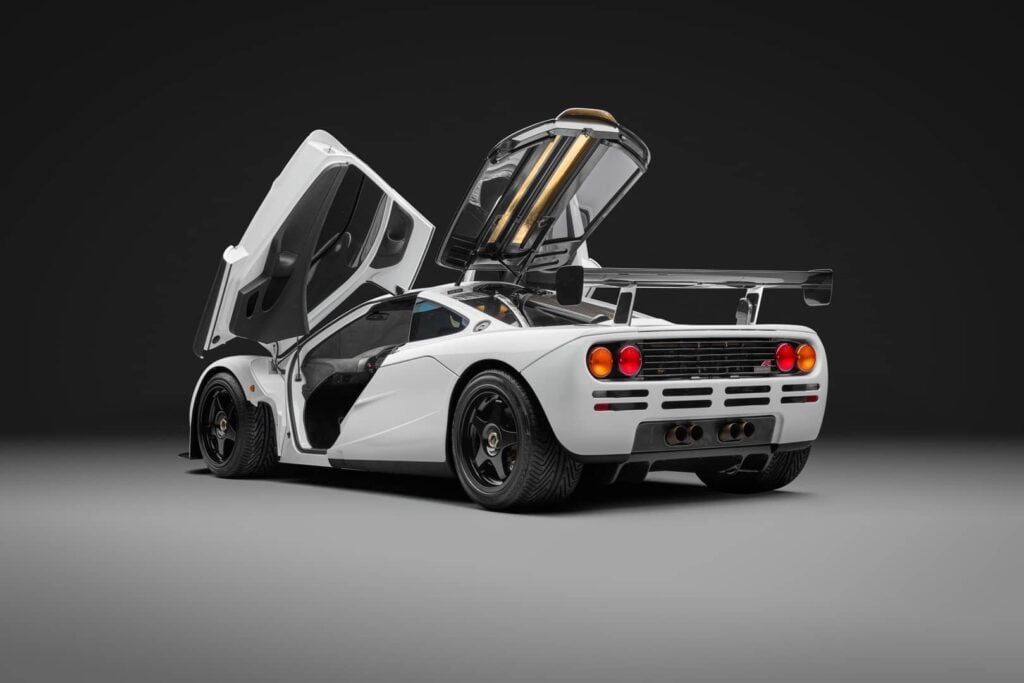
For collectors considering acquisition, the primary question is not whether the F1 will appreciate, but whether the premium commanded by exceptional examples – low mileage, documented provenance, original specification – will continue to expand relative to more heavily used cars. Historical evidence suggests that condition premiums widen over time as collectors increasingly prioritize originality, making the most pristine examples the soundest long-term holdings.
The McLaren F1 has proven itself not merely as an automotive achievement but as a store of value that rewards patient ownership. For those with the means and the appreciation, it remains among the most compelling acquisitions in the collector car market.

RM Sotheby’s offered a 1994 McLaren F1 for sale in Abu Dhabi last week that started its life with the Brunei Royal Family. This example was rebuilt by McLaren in 2007 to feature its Ibis White exterior and was equipped with the High-Downforce Kit and LM-spec interior. Further proving the stunning increase in value for this car in the past decade, it sold for $25,317,500.