
What Are Mopar High Impact Colors?
Mopar High Impact colors are the bold, eye-catching factory paint options offered by Chrysler Corporation on its Dodge and Plymouth muscle cars from 1969 to 1973. Known for their near-fluorescent intensity, these vivid hues became one of the most iconic features of the classic American muscle car era.
Dodge marketed its lineup as “High-Performance Colors,” while Plymouth called theirs “High Impact Colors” – but today, enthusiasts and collectors use both terms interchangeably to describe the full palette of ten legendary factory shades.
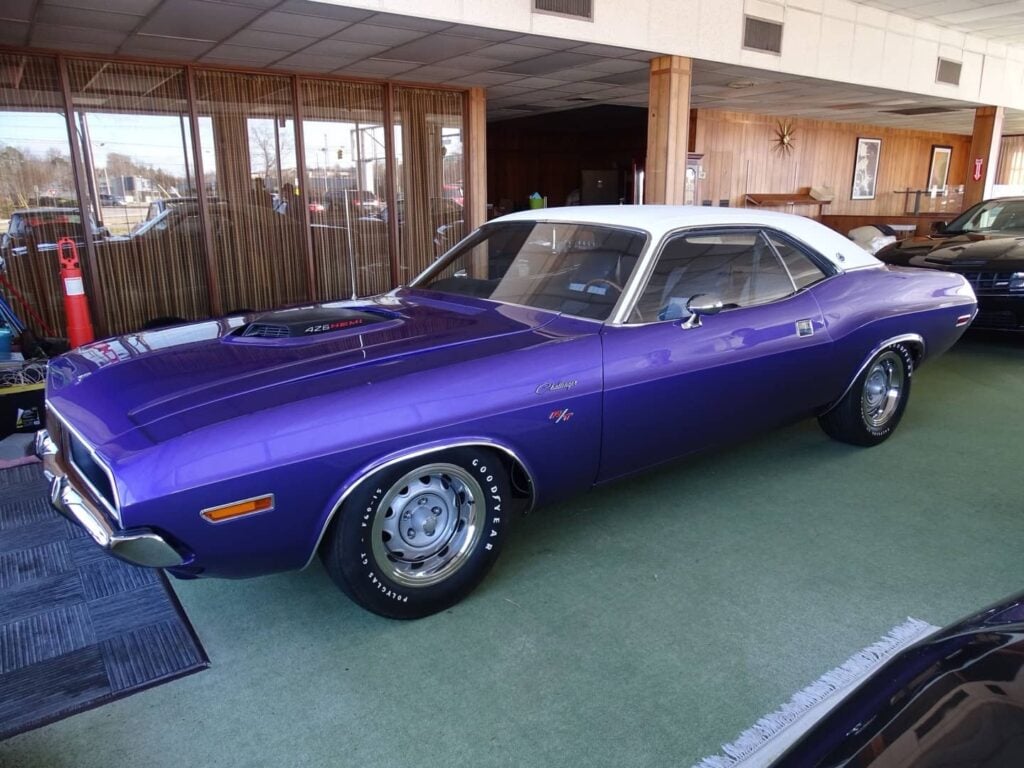
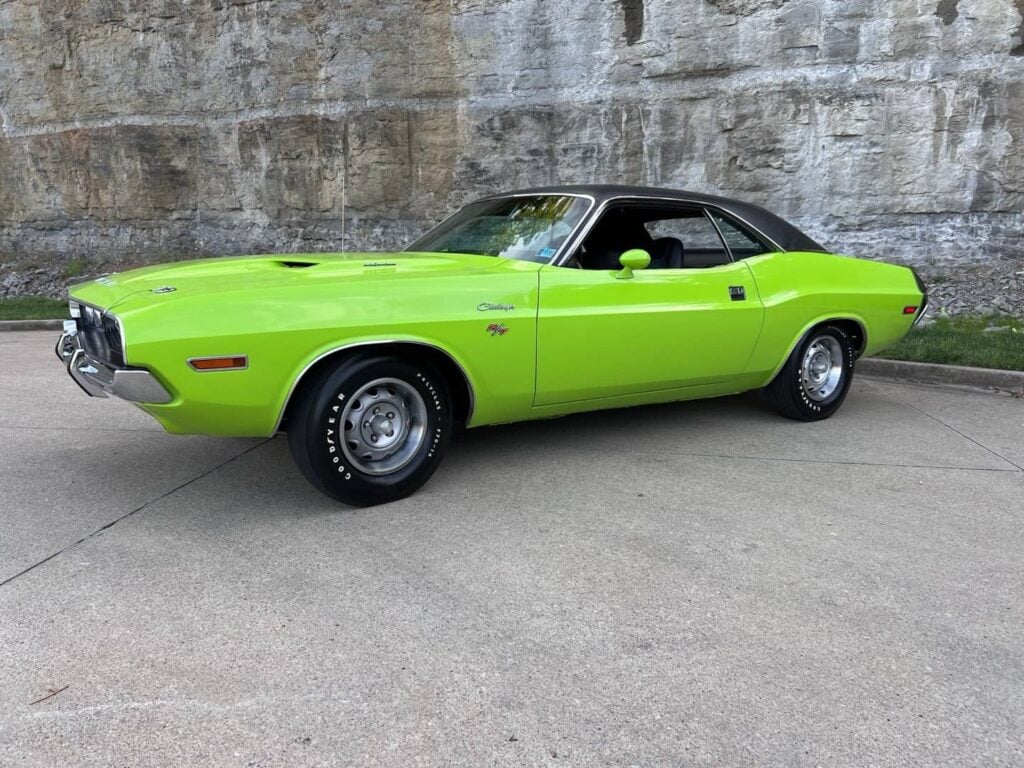
A selection of Mopar muscle cars in these striking colors will be offered for sale by GAA Classic Cars at their upcoming July 2026 auction including a 1970 Plymouth Barracuda finished in Moulin Rouge, a 1970 Dodge Challenger R/T finished in Lime Light, a 1970 Dodge Challenger T/A in Panther Pink, and a 1970 Dodge Challenger RT/SE Hemi in Plum Crazy.

The Origin of High Impact Colors: One Salesman's Bold Idea
The story behind Mopar High Impact colors begins with a single forward-thinking salesman. In 1968, a Los Angeles-based Chrysler-Plymouth Regional Sales Manager named Jock Fearer observed that vibrant European sports cars – vivid Signal Green Porsches, Fly Yellow Ferraris – were generating enormous attention on California streets.
Fearer began special-ordering Plymouth Road Runners in bold, non-standard colors for his sales district. His initial choices were Omaha Orange (repurposed from Dodge fleet and municipal vehicles), Bahama Yellow (inspired by a 1966 Porsche shade), and Rallye Green (adapted from the 1968 Chevrolet Camaro exclusive).
Those eleven special-order Road Runners – each tagged with a “999” custom paint code – sold almost immediately. Chrysler’s national sales team took notice, assigned official Mopar paint codes to Fearer’s three colors, and launched a full in-house development program to create an entirely new High Impact paint program for the 1970 model year.
All 10 Official Mopar High Impact Colors
Chrysler officially introduced ten High Impact colors between 1969 and 1971, each offered under two names – one for Dodge, one for Plymouth – sharing identical paint codes across both divisions:
Paint Code | Dodge Name | Plymouth Name | Years Available |
|---|---|---|---|
EF6 | Rallye Green | Bright Green | Spring of 1969 |
EK2 | Go Mango | Vitamin C | 1969-1970 |
EL5 | Butterscotch | Bahama Yellow | 1969-1971 |
EV2 | HEMI Orange | Tor-Red | 1969-1972 |
FC7 | Plum Crazy | In-Violet | 1970-1971 |
FJ5 | Sublime | Lime Light | 1970 Only |
FJ6 | Green Go | Sassy Grass | 1970-1971 |
FM3 | Panther Pink | Moulin Rouge | Spring 1970 |
FY1 | Top Banana | Lemon Twist | 1970-1974 |
GY3 | Citron Yella | Curious Yellow | 1971 Only |
These High Impact paint colors were available as a factory option for roughly $15 above the base price, making them surprisingly accessible to buyers at the time. They were technically offered across the full Chrysler, Dodge, and Plymouth lineup – not just performance models.
Why High Impact Colors Were Introduced
Chrysler’s timing was deliberate and strategic. By the late 1960s, the muscle car wars between Detroit’s Big Three had intensified to the point where raw horsepower numbers alone were no longer enough to win young buyers.
Color became a performance specification. The High Impact palette was perfectly aligned with the counterculture movement – psychedelic art, bold fashion, and a broad rejection of conservative norms all shaped what younger buyers wanted in a car.
Names like “Plum Crazy” (slang for “absolutely nuts”) and “Go Mango” (a play on “go, man, go!”) were intentionally irreverent and fun. These weren’t just paint choices – they were attitude. A Plum Crazy Dodge Challenger or a Sublime Plymouth Road Runner made a statement as loud as its engine.
How Popular Were Mopar High Impact Colors?
The High Impact color program generated significant showroom traffic and real sales volume. Go Mango was ordered on approximately 4% of 1970 Plymouth Barracudas and over 5% of 1970 Dodge Challengers – strong numbers for any specialty paint option.
These colors were inseparable from Mopar’s peak performance identity, appearing on the most desirable models of the era: the Dodge Charger, Dodge Challenger, Plymouth Barracuda, Plymouth Road Runner, and Dodge Super Bee.
The High Impact program was so successful that Ford and General Motors both launched competing bold-color programs for their own muscle cars. Ford introduced its “Grabber” colors (Grabber Blue, Grabber Green, Grabber Orange) for the Mustang, while AMC countered with “Big Bad” colors for the AMX and Javelin. General Motors added options like Fathom Green and Daytona Yellow to the Camaro and Chevelle. Mopar’s program is widely credited with forcing the entire industry to rethink color marketing for performance vehicles.
The End of the High Impact Era
The 1973 oil embargo effectively ended the muscle car era – and took the High Impact colors with it. As fuel prices skyrocketed, emissions regulations tightened, and horsepower ratings collapsed, the market for bold-colored, big-block muscle cars evaporated.
By late 1973, only Top Banana / Lemon Twist (FY1) remained – the last survivor of the original palette – before it, too, was discontinued. The golden age of Mopar High Impact paint was over.
The High Impact Color Revival
Decades later, Dodge brought the High Impact colors back when it relaunched the Challenger nameplate in 2008. The 2006 Challenger concept debuted in HEMI Orange Pearl – a modernized version of the original EV2, enhanced with iridescent mica flakes – and generated an enormous reaction at the Detroit Auto Show.
Dodge subsequently revived Go Mango (2006 and 2016), Top Banana (on the 2006 Charger Daytona), and multiple generations of Plum Crazy for the modern Challenger. The 2023 Dodge Challenger SRT Hellcat Jailbreak “Last Call” edition was offered in Plum Crazy, directly connecting the final chapter of the Challenger’s production run to the color that defined it five decades earlier.
Mopar High Impact Colors and Collector Car Values Today
In today’s collector car market, a factory-correct Mopar High Impact color is one of the most significant value drivers a classic muscle car can have. Hagerty’s analysis of nearly 1,300 auction transactions confirmed that High Impact paint colors materially affect realized hammer prices, with rare shades commanding the largest premiums.
Citron Yella / Curious Yellow (GY3) – produced for only one model year in 1971 – delivered the highest color premium at 17% above market average. Plum Crazy / In-Violet (FC7) consistently commands a premium driven by its cultural cachet and devoted collector following. Meanwhile, the widely ordered HEMI Orange / Tor-Red (EV2) shows little premium over market because of its relative frequency.
The rarest of all High Impact hues, EF6 Bright Green / Rallye Green – available only during Spring 1969 – is among the most coveted Mopar options in existence. A 1969 Charger Daytona in Bright Green sold for over $400,000 at auction in 2022.
Key Factors That Affect Value for High Impact Color Cars
Collectors, appraisers, and auction consignors should understand the specific variables that amplify – or limit – the value impact of a High Impact color:
- Factory documentation – A car confirmed by its original fender tag to have left the factory in a specific High Impact paint code is significantly more desirable than a respray
- Color-body-engine combination rarity – A Sublime 1970 Plymouth Barracuda with a 426 Hemi is exponentially rarer and more valuable than the same color on a base-engine model
- Short production windows – Colors like EF6 Bright Green and FM3 Panther Pink, available for only a single season, naturally produced very few surviving examples
- Cultural resonance – Colors like Plum Crazy command premiums that outpace their production numbers, driven by emotional appeal and decades of pop-culture exposure
- Concours accuracy – Correct High Impact paint is a critical judging criterion at top-level concours events and restoration shows
The Lasting Impact on Muscle Car Culture
Mopar High Impact colors did more than sell cars – they permanently altered how the automotive industry thinks about color as identity. They inspired competing programs across Detroit, influenced decades of aftermarket customization, and became deeply embedded in American muscle car culture.
Today, seeing a Plum Crazy Challenger, a Sublime Road Runner, or a Go Mango Barracuda still stops traffic – just as it did in 1970. For buyers and sellers in the collector car market, a verified, numbers-matching High Impact color isn’t just a cosmetic detail. It is a provenance point, a piece of factory history, and a measurable premium – all in one unforgettable coat of paint.