
Bonhams Paris 2026 Preview: Pre‑War Glamour Meets Teutonic Icons at the Polo de Paris
When Bonhams|Cars opens the doors to its annual Paris Sale on January 30, 2026, the event will do more than add another chapter to Rétromobile week. Staged for the first time at the historic Polo de Paris, this year’s auction is carefully curated to signal confidence at both ends of the collector spectrum: blue‑chip pre‑war royalty and evergreen post‑war performance heroes.
At the core of that strategy sit three standout German lots that together trace the evolution of Mercedes‑Benz and BMW from inter‑war coachbuilt luxury to 1950s Gran Turismo dominance and finally to the era of the usable supercar: a 1934 Mercedes‑Benz 500K Coupé with Vanvooren coachwork, a 1955 Mercedes‑Benz 300 SL “Gullwing” coupé, and a 1981 BMW M1.
For bidders, this trio offers a cross‑section of what has historically performed best in Paris: rare, documented, European‑flavored machinery with international appeal and known market benchmarks.

Rétromobile Week Context: Why Paris Matters More in 2026
Rétromobile’s 50th anniversary edition is expected to draw well in excess of the 146,000 visitors recorded in 2025, and the surrounding auctions – in addition to the official Gooding Christie’s sale – from Bonhams, Artcurial, and RM Sotheby’s will once again compress a full season’s worth of blue‑chip trading into a few days across the city.
Bonhams has leaned into that dynamic by emphasizing two pillars:
- Pre‑war and immediate post‑war European coachbuilt cars, anchored by the 1934 Mercedes‑Benz 500K and supported by the “Les Belles Endormies” selection from the Pierre Strinati collection. These 11 cars are all offered without reserve, adding a sense of jeopardy and discovery to the catalogue.
- Proven post‑war icons, including the 1955 300 SL Gullwing, modern performance machinery, and a slate of 1980s – 1990s drivers’ cars aimed squarely at a younger, use‑oriented collector base.
Against that backdrop, the three headline German lots become bellwethers for how the upper tiers of the market will behave in 2026: will buyers prioritize provenance and originality, driving experience, or the broader story of each car?
1934 Mercedes‑Benz 500K Coupé by Vanvooren: Art‑Deco Couture on Wheels
Bonhams’ Paris catalogue is led by a 1934 Mercedes‑Benz 500K (Type W29) Coupé wearing rare coachwork by Vanvooren of Paris, estimated at €1,500,000 – €2,500,000. In a week when several auction houses will present pre‑war machinery, this car stands out precisely because it marries German engineering with French coachbuilding flair.
Coachbuilt Rarity and Strinati Provenance
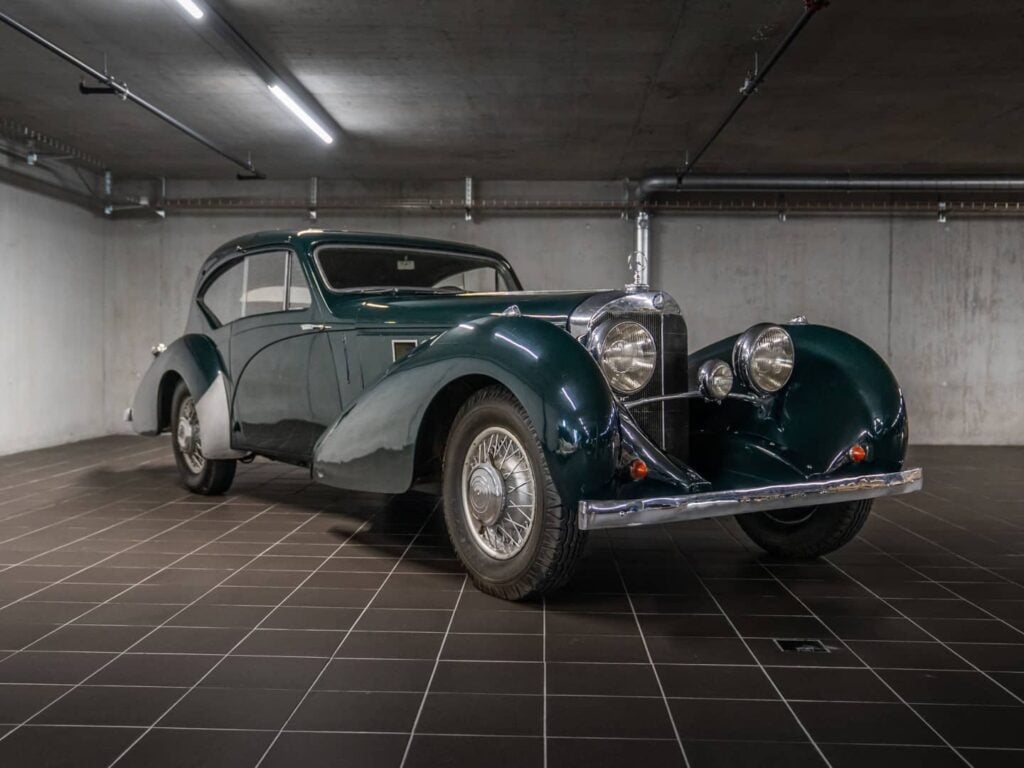
The 500K itself sits near the apex of Mercedes pre‑war production, a supercharged grand tourer whose eight‑cylinder engine and imposing presence made it a favorite of industrialists and heads of state. Yet it is the Vanvooren body that makes this example particularly Paris‑appropriate. Vanvooren, based in Courbevoie, built some of the most sophisticated custom bodies for Bugatti, Rolls‑Royce, and Hispano‑Suiza; to see its restrained, elegant lines atop a German chassis is to see inter‑war Europe’s design language in dialogue.
This particular 500K comes from the Pierre Strinati collection, an ensemble of long‑hidden European classics nicknamed “Les Belles Endormies” (“the sleeping beauties”). Strinati preserved many of his cars for decades, often maintaining originality at the expense of regular use. That period of long‑term, low‑profile ownership is increasingly prized in today’s market, especially when matched with period photographs and notes, as is the case with several Strinati cars.
The 500K’s guide of €1.5m – €2.5m positions it in the upper bracket of recent 500K results, but it is consistent with the market’s willingness to pay a premium for rarer body styles and strong European provenance. For buyers already active in the Pebble Beach and Villa d’Este ecosystems, this is exactly the sort of car that can anchor a concours‑grade pre‑war subset.
Market Signal
If bidding pushes beyond the upper estimate, it will reinforce a pattern that has been emerging quietly: truly special pre‑war cars with good European histories can still out‑perform more hyped 1960s – 1970s machinery. If it stalls closer to the lower estimate, expect renewed conversations about demographic shifts and the long‑term depth of the pre‑war buyer pool. Either way, this 500K will be closely watched by enthusiasts.
1955 Mercedes‑Benz 300 SL “Gullwing”: Matching‑Numbers, High‑Speed Spec
While the 500K speaks to inter‑war opulence, the 1955 Mercedes‑Benz 300 SL Gullwing on offer in Paris distills post‑war engineering ambition into a single black‑over‑red coupé. With an estimate of €1,200,000 – €1,500,000, this car is pitched squarely within the current core market for good‑quality Gullwings, but its specification and history give it several important differentiators.
Specification and Mechanical Provenance
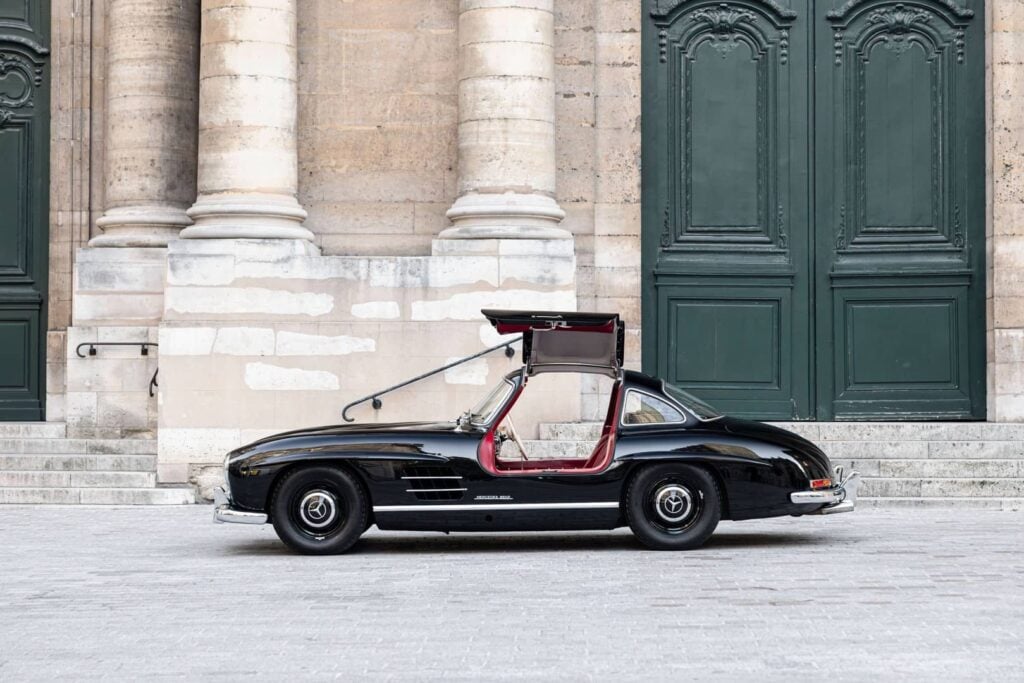
The car, chassis 198.040.5500614 with engine 198.980.5500650, is a matching‑numbers example, retaining its original chassis, body, and engine, and is recorded in Eric Le Moine’s 300 SL Register. It left the factory on August 9, 1955, and was delivered new to New York on August 25 of the same year via Mercedes-Benz Distributors, Inc., following the typical US‑delivery pattern that characterizes many Gullwings.
Originally finished in Silver Grey Metallic with blue leatherette and tartan cloth upholstery, it now presents in black over red leather – a classic and highly commercial combination for the model. Key to its appeal, however, is a relatively rare mechanical option: a long axle ratio of 1:3.42 instead of the standard 1:3.64, a setup that allows the car to exceed 260 km/h and comes with a speedometer capable of reading 180 mph. This option was specified by the first owner and today is sought after by drivers who intend to use the car on Autobahn or autostrada‑style runs where long‑legged cruising is prized.
Restoration and Ongoing Care
The Gullwing spent most of its early life in the United States, passing through four owners before being imported into the United Kingdom in 1980, where it underwent an extensive restoration toward the end of that decade. Subsequent UK ownership gave way to the current French vendor, a Parisian collector who acquired the car in 2011 and entrusted its maintenance to Mercedes-Benz Classic in Stains and specialist GFB Classic‑Auto.
Invoices on file total more than €60,000 and cover a comprehensive mechanical overhaul: rebuilt fuel‑injection pump, new injectors, refreshed hoses, fully rebuilt brakes, and refurbished radiators, starter, and alternator, among other items. An independent expertise report notes “excellent overall running order,” with visible parts of the underbody and chassis in very good condition and no apparent accident damage or structural corrosion.
In the Gullwing market, originality and patina must increasingly be balanced with comfort and usability. This car’s combination of correct numbers, known history, and high‑quality – but not ultra‑recent – restoration positions it well for a buyer who wants a turnkey event car rather than a preservation‑class museum piece.
Benchmarking the Estimate
With core values for solid driver‑grade 300 SL Gullwings having settled into the €1.1m – €1.5m range over the past few years, Bonhams’ €1.2m – €1.5m guidance looks realistic. The long‑axle option and Paris‑centric location may support a result toward the upper half of that range, especially given continued global demand for the model and the visibility of Rétromobile‑week transactions.
1981 BMW M1: Analog Supercar with Long‑Term Upside
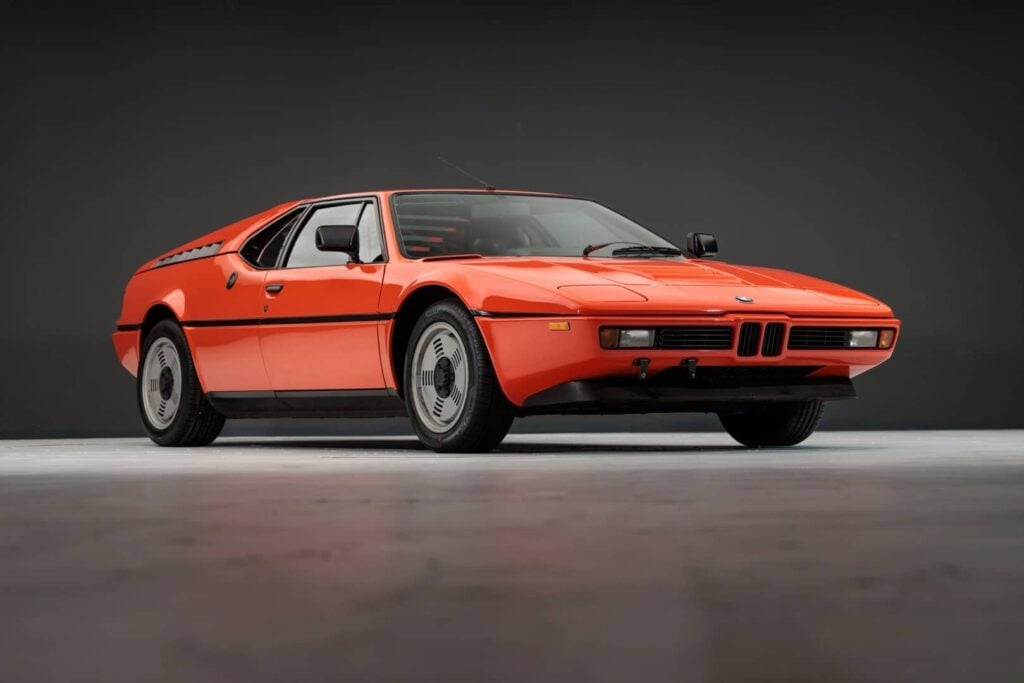
If the 500K and 300 SL represent established blue chips, the 1981 BMW M1 in the Paris Sale speaks to a slightly different collector profile: one that wants an analog, mid‑engined supercar with credible motorsport ties but a more approachable entry point than a Ferrari F40 or Porsche 959. Bonhams’ catalogue positions the M1 alongside other 1980s – 1990s performance machinery, such as Venturi competition cars and Ferrari 512 variants, reflecting broader interest in that era documented across the Paris auctions.
BMW’s first and, for decades, only mid‑engined production car, the M1 is central to the brand’s motorsport and performance narrative. Over the past several years the market has been consistently clear: well‑presented, low‑production homologation‑era cars have outperformed more common contemporary exotics, particularly in Europe. The M1’s styling, by Giorgetto Giugiaro, and its naturally aspirated straight‑six deliver a driving experience that feels significantly more analog than later M cars, which is precisely what many younger collectors now seek.
Rétromobile Week Positioning
The M1 also benefits from the 2026 Rétromobile focus on BMW design and motorsport history, not least through the BMW Art Car World Tour stop in Paris, which will showcase famous BMW Le Mans and touring‑car entries. That external narrative helps frame the M1 not just as a rare 1980s supercar, but as part of a broader story the brand is actively telling about itself.
Collectors considering an M1 in Paris will be weighing not only specification and history but also medium‑term appreciation potential. As other homologation models from the period – Lancia Delta Integrale Evoluzione, Mercedes 190E 2.5‑16 Evolution, and E30 M3 Sport Evolution – have already surged, the M1’s relative rarity and iconic design suggest there may still be room to move, particularly for the best European‑delivered cars.
Beyond the Headliners: A Catalog Built with Depth
While these three German lots will capture much of the pre‑sale attention, Bonhams’ 2026 Paris Sale is designed with depth in mind. The Strinati‑sourced “Les Belles Endormies” selection spans a 1938 Delage D8‑120 Cabriolet, a 1939 Voisin C30, a 1956 Mercedes‑Benz 190 SL, and a 1941 BMW 335 Cabriolet, all offered without reserve and all likely to attract collectors who appreciate originality and long‑term single‑owner narratives.
Alongside them, a supporting cast of Mercedes‑Benz models – including a 1938 320N Cabriolet, a pair of early‑1950s 300 S variants, and a 1970 300 SEL 6.3 – provides laddered entry points into the brand across eras. Modern performance cars, from Venturi to Ferrari and Porsche, round out the sale and align with the broader Paris trend toward 1980s – 2000s drivers’ cars, a segment that continues to underpin overall auction liquidity.
For sellers, that diversity mitigates risk: even if the very top of the market proves selective, the mid‑market and modern‑classic segments can still deliver strong sell‑through rates. For bidders, it means that underbidders on the 500K, M1, or 300 SL will have ample opportunity to redirect capital within the same sale.
What to Watch on January 30
Three questions will frame the narrative as the Bonhams rostrum opens at the Polo de Paris:
1. Can pre‑war greatness still set the tone?
The performance of the Vanvooren‑bodied 1934 Mercedes‑Benz 500K will be a litmus test for high‑end pre‑war collector appetite in a year when demographic questions continue to swirl around that segment.
2. Will the 300 SL maintain its blue‑chip status?
A matching‑numbers, well‑maintained Gullwing with a rare high‑speed axle ratio is as close to a benchmark as the model gets. How closely the final price tracks the €1.2m – €1.5m estimate band will say much about depth of demand at that level.
3. Is the M1 still climbing?
The 1981 BMW M1’s result will help calibrate expectations for 1980s homologation‑era supercars in Europe. A strong showing would reinforce the thesis that analog driving experience and rarity remain potent value drivers in a market increasingly shaped by younger collectors.
Whatever the hammer prices, Bonhams’ 2026 Paris Sale has achieved something strategically important even before the first lot crosses the block: it has created a catalogue where a 1930s supercharged coupé, a 1950s fuel‑injected Gullwing, and an early‑1980s mid‑engined BMW can plausibly sit on the same collectors’ shortlists. On January 30, the market will decide how each of those eras is valued in 2026.