
Ford GT40 Value Overview
The Ford GT40 has emerged as one of the most compelling collector car stories over the past three years. After a quiet 2023 with no major public sales, the model saw a dramatic resurgence in 2024 that has continued into early 2026. Road-going Mk I examples have appreciated from the mid-$4 million range to over $7 million, while race cars with significant Le Mans or Sebring history have shattered previous records, trading for $7.85 million to $13.2 million. Throughout this period, the market has displayed increasing sophistication – rewarding rarity, originality, and documented competition history while penalizing cars with less clear provenance, even those with celebrity connections.
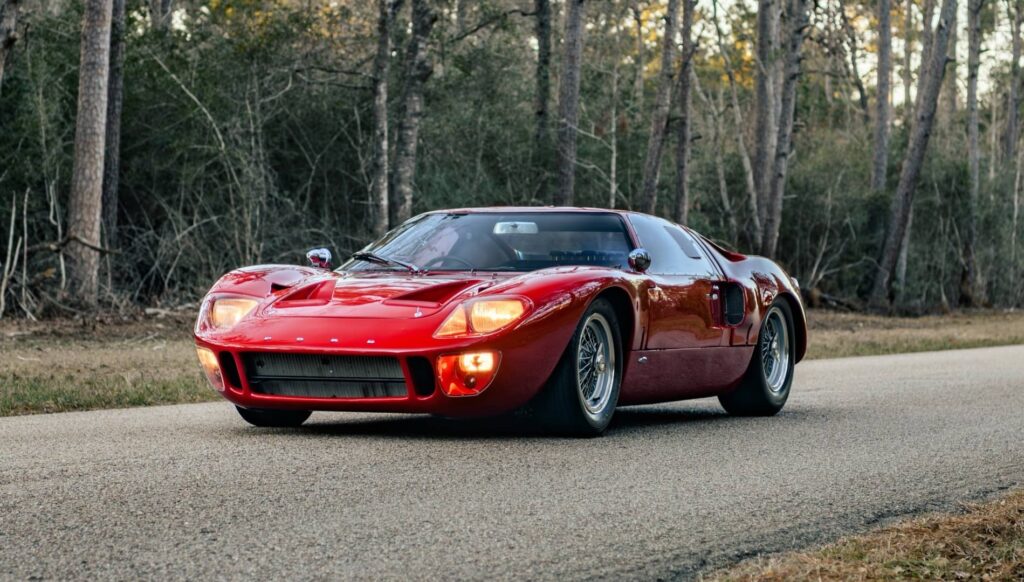
RM Sotheby’s will be offering a 1967 Ford GT40 Mk I for sale at their upcoming Miami auction later this month – a road-going example, one of 31 produced with an estimate of $6,500,000 to $8,000,000. Is the market prepared to spend that much on a non-racing GT40? The past few years can give us some clues.
Auction Results by Year
2023: A Dormant Year
The GT40 market was largely quiet in 2023. The only notable offering was a 1967 Ford GT40 MK IV at Mecum Kissimmee in January 2023, estimated at $2 – $2.2 million, which failed to sell. No other original GT40s appeared at major public auctions during the year. This lull followed a broader trend in the collector car market, where post-COVID exuberance was cooling and many high-end segments entered a period of price correction.
2024: The Breakout Year
Three significant GT40 sales in 2024 reestablished the model’s market strength and set the stage for record-breaking results in subsequent years:
The January sale of P/1052 at Mecum Kissimmee was a road car – one of only 31 Mk I road cars ever produced – with 13,442 original miles and an unblemished accident history. It had been unseen by the public for nearly 30 years. The hammer price of $6.3 million (plus premium) set a strong benchmark for road-going GT40s.
The March sale of P/1069 at Broad Arrow’s Amelia Island auction brought $4,405,000, within its $4 – $5 million estimate. While also a road car, its lower result compared to P/1052 illustrates how originality, condition, and provenance create substantial price differences even within the same subset of road cars.
The standout result of 2024 came at Mecum Monterey in August, when a 1969 GT40 Mk I Lightweight – one of 10 factory competition lightweights – sold for $7,865,000. This became the third-highest price ever achieved by a GT40 at auction. Hagerty noted the result was “exceptional” given that P/1080 never competed in period at marquee events like Le Mans, Sebring, or Daytona, making the price all the more significant. Hagerty analysts commented that “buyers are beginning to value and contextualize Ford’s GT40 more in line with its importance in automotive history,” especially as several Enzo-era Ferraris fell short of their estimates at the same week.
2025: Records Shattered
For the second consecutive year, Mecum sold a GT40 Mk I road car at Kissimmee. P/1034 – the first of 31 road cars delivered to a private customer – brought $7,040,000, topping the $6,930,000 achieved by P/1052 the year before. This represented a roughly 1.5% increase year over year for comparable road cars, but more importantly, it confirmed the upward trend.
The record-breaking result came a month later when RM Sotheby’s sold the 1966 GT40 Mk II (P/1032) for $13,205,000 at their Miami auction. This was a race car with extraordinary provenance: it finished second at the 12 Hours of Sebring and competed at the 24 Hours of Le Mans as a Holman-Moody entry, driven by Mark Donohue and Paul Hawkins. After its racing career, it served as a Ford development test mule before spending over five decades at the Indianapolis Motor Speedway Museum. It was one of only eight Mk II examples ever built, and the sale became the highest price ever recorded for a Ford GT40 at public auction.
January 2026: Strength and Selectivity
The January 2026 Mecum Kissimmee sale produced one of the most telling outcomes in recent GT40 history. The 1966 MkII Factory Lightweight (XGT-3), one of only three lightweight MkII models ever produced and considered by historian Ronnie Spain to be the most original MkII in existence, sold for $12,375,000. This was the second-highest GT40 auction price ever, trailing only P/1032’s result from the prior month.
Meanwhile, P/1018 – Carroll Shelby’s personal GT40, one of only two GT40s ever driven by Shelby himself, and a car with an extensive show and racing history including 11 wins in 13 starts at the Le Mans Classic – failed to sell despite an estimate of $5.5 – $6 million.
This divergence sent a clear signal about the current market. As one analyst noted: “Mere provenance is insufficient. Factors such as configuration, authenticity, and long-term relevance continue to hold significant weight – perhaps now more than ever”. Bidders are willing to pay eight-figure sums for the right car, but they are exercising discernment rather than chasing every headline offering.
Road Cars vs. Race Cars: The Premium
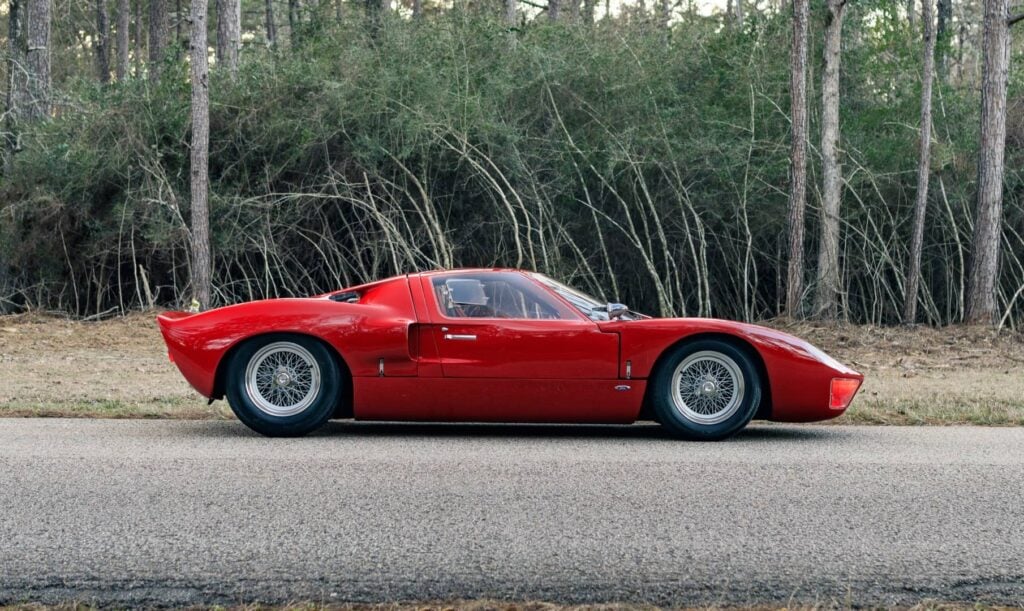
The data from the past three years reveals a consistent and significant premium for GT40s with documented competition history over road-going examples:
Road car range: $4.4 million to $7.04 million, depending on originality, condition, and specific history. The “average” GT40 transacts for just under $6 million, according to Hagerty.
Race car range: $7.85 million to $13.2 million, with the highest premiums going to cars with factory Le Mans or Sebring history, particularly the rare Mk II variants.
The premium for race cars over road cars is approximately 50 – 90%, though the gap widens substantially for the rarest competition variants. Several factors drive this differential:
Rarity within rarity: While only about 105 GT40s were built across all marks, factory competition lightweights and Mk IIs are far scarcer. Only eight Mk IIs and three Mk II lightweights were produced.
Le Mans provenance: Cars that competed at Le Mans during Ford’s 1966 – 1969 winning streak carry a historical cachet that road cars cannot match.
Originality and configuration: The market is increasingly rewarding cars that retain original body panels, tubs, and drivetrains. XGT-3’s sale at $12.375 million was underpinned by its status as the most original MkII in existence.
Road cars, while not reaching the same heights, have shown steady appreciation. The Mk I road car subset – 31 examples built to satisfy FIA homologation requirements – has moved from the mid-$4 million range to over $7 million in two years. These cars feature conveniences like heated windscreens, mufflers, carpeted interiors, and Borrani wire wheels that distinguish them from their track-oriented siblings.
Broader Market Context
Hagerty Indexes
Hagerty’s Blue Chip index was unchanged entering 2025, locking in a modest two-percent decline over the prior year. Seven of Hagerty’s 11 collector car indexes were below January 2024 levels, with Muscle Cars and Ferrari suffering the steepest drops (10% and 9%, respectively). Against this backdrop, the GT40’s rising trajectory is especially notable – it is outperforming many of its peers in the ultra-high-end segment.
The Ferrari Comparison
One of the most frequently cited dynamics in GT40 valuation is the model’s discount relative to Ferrari competitors of the same era. Hagerty data shows that Ferrari 250 LMs trade in the $17 – $24 million range, while the 330/412 P family commands even higher prices – values that have “lapped the Ford more than three times over”. The GT40’s $6 – $13 million range, given its four consecutive Le Mans victories (1966 – 1969) and unmatched cultural significance in American motorsport, suggests significant room for further appreciation.
A Maturing Market
The January 2026 results – where one GT40 sold for $12.375 million while another failed to sell at $5.5 – $6 million – suggest the collector car market may be entering “a more measured phase”. Capital is flowing, records are being set, but buyers are more discriminating than during previous boom periods. For GT40s specifically, this means:
- Configuration matters more than celebrity. XGT-3’s rarity and originality trumped P/1018’s connection to Carroll Shelby.
- Authenticity commands top dollar. Cars described as “most original” by recognized experts are achieving the highest premiums.
- Competition history creates a floor. Race cars with documented entries at Le Mans, Sebring, or Daytona maintain strong demand even in soft markets.
- Road cars benefit from scarcity. With only 31 Mk I road cars built, any public offering draws significant attention and competitive bidding.
Outlook
The GT40 market appears well-positioned for continued strength. The model benefits from a compelling historical narrative (Ford vs. Ferrari), cultural reinforcement through the 2019 film Ford v Ferrari, extreme rarity (approximately 105 total production), and a still-significant discount to its Ferrari contemporaries.
For road cars, the $7 million level now appears to be a reasonable benchmark for the best examples, with lesser examples trading in the $4 – $5 million range. For race cars, the $10 – $13 million range is the new normal for MkII variants with Le Mans history, while MkI lightweights with less prominent competition records trade in the $7 – $8 million range. The market’s increasing emphasis on authenticity, originality, and configuration specifics suggests that the spread between “good” and “great” GT40s will continue to widen.