
Mecum Nashville Results
Mecum’s Nashville auction results proved a successful Tennessee debut, with more than $70 million in total sales and around an 74% sell-through rate. Held September 22-26 at Nashville Superspeedway in Lebanon, Tennessee, the inaugural Nashville collector car auction saw roughly 1,750 vehicles spanning classic cars, American muscle, historically important competition cars, modern exotics and high-end custom trucks cross the block.
The Mecum Nashville top ten sales totaled $10,556,500. A 2024 Ferrari 812 Competizione Aperta led the collector car auction results at $4.05 million, but Ford dominated the balance of the leaderboard with six entries, including two historically significant Roush Racing Mustangs and three generations or interpretations of the Ford GT.
Nashville Collector Car Auction
The Mecum Nashville results established the event as a strong addition to the company’s collector car auction calendar, with more than $70 million in sales and roughly three-quarters of the offered lots finding buyers. The Roush Automotive Collection was particularly important to the sale. Assembled over 38 years, it includes more than 150 vehicles, and Nashville marked the first time selections from the private collection were offered publicly.
Mecum Nashville Top Ten
Rank | Vehicle | Price |
|---|---|---|
1 | 2024 Ferrari 812 Competizione Aperta | $4,050,000 |
2 | 1995 Ford Mustang Cobra “Nobody’s Fool” IMSA Road Race Car | $935,000 |
3 | 1997 Ford Mustang Cobra SCCA Trans-Am Road Race Car | $825,000 |
4 | 2020 Ford GT Mk II | $792,000 |
5 | 2005 Ford GT | $770,000 |
6 | 2006 Ford GT | $737,000 |
7 | 1972 Chevrolet K5 Blazer Custom | $693,000 |
8 | 1969 Ford Mustang Boss 429 Fastback | $616,000 |
9 | 1965 Aston Martin DB5 | $605,000 |
10 | 2014 Ferrari 458 Spider | $533,500 |
2024 Ferrari 812 Competizione Aperta - $4,050,000
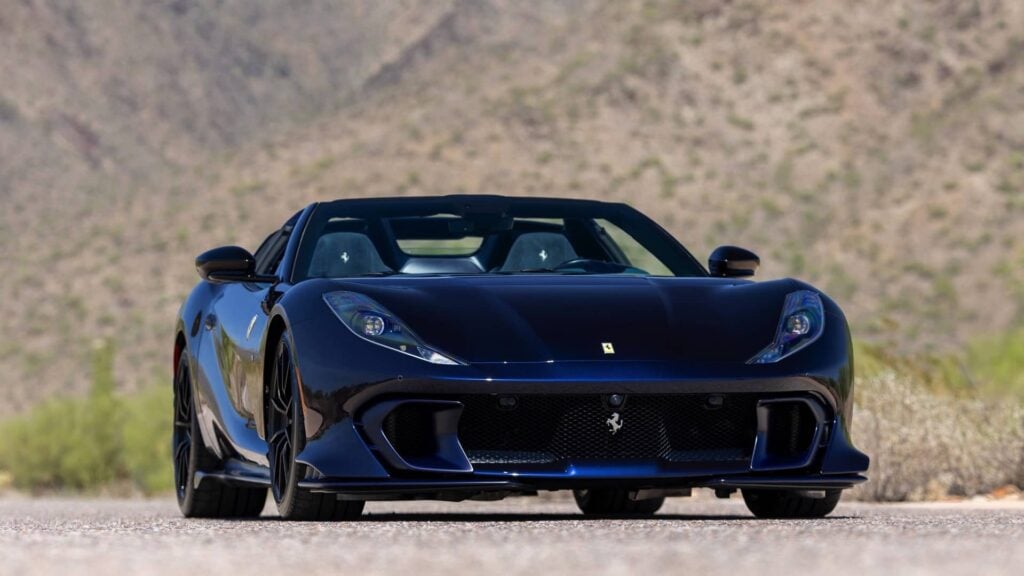
The 812 Competizione Aperta represents the open-roof culmination of Ferrari’s long-running front-engine V12 formula. Based on the 812 Superfast but developed as a more extreme, track-focused limited series, the Aperta combines a removable Targa-style roof with a naturally aspirated 6.5L V12 producing 830 metric horsepower and revving to 9,500 rpm. Production was capped at 599 cars, making it substantially rarer than Ferrari’s regular-production V12 models.
The Nashville example was effectively new, showing approximately 316 miles when it crossed the block. That combination of negligible mileage, limited production and the increasingly rare experience of a naturally aspirated Ferrari V12 made it the auction’s clear marquee car. Its $4.05 million final price was more than four times the result achieved by the second-place Mustang and accounted for 38.4% of the combined top-ten total.
1995 Ford Mustang Cobra “Nobody's Fool” - $935,000
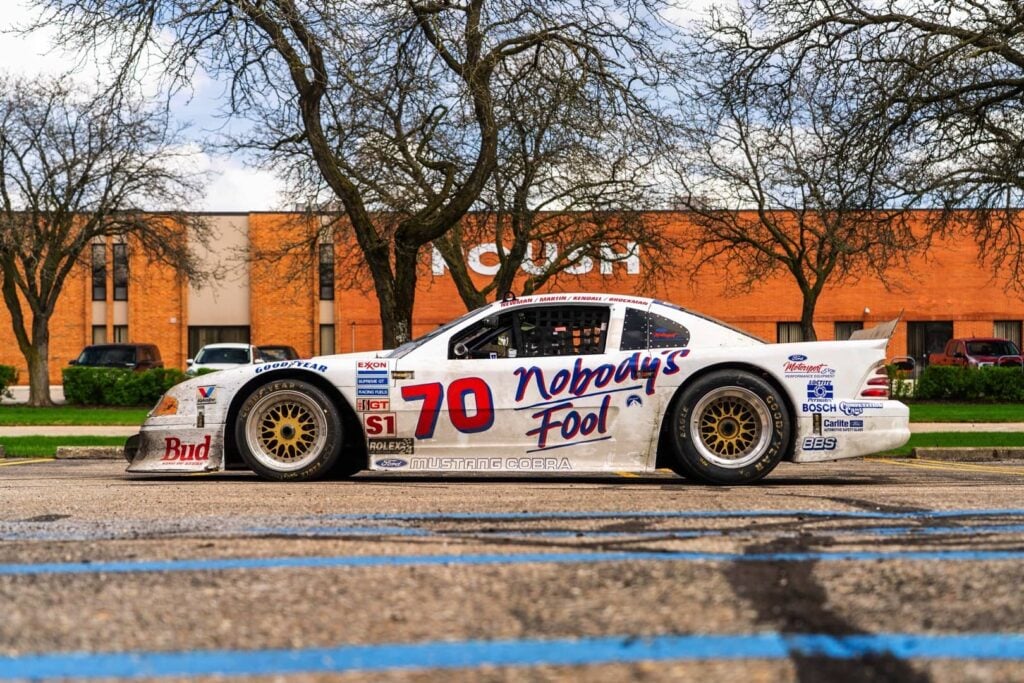
Although it wore Mustang Cobra bodywork, “Nobody’s Fool” was a purpose-built Roush Racing IMSA competition car rather than a modified showroom Mustang. Constructed around a NASCAR-style tubular structure and powered by a Roush-prepared 6.0L Ford V8, it represented the muscular GTS-1 era of American sports-car racing.
Its defining achievement came at the 1995 Rolex 24 at Daytona. Paul Newman shared the car with Tommy Kendall, Mark Martin and Michael Brock, winning the GTS-1 class and finishing third overall. The No. 70 honored Newman, who had recently turned 70, while Paramount Pictures used the title of his film Nobody’s Fool as the sponsorship theme. Before the Nashville collector car sale, Roush returned the race-worn bodywork to the car, preserving the visual evidence of its Daytona campaign rather than presenting it as a freshly restored racer. The $935,000 result made it the highest-priced competition car of the auction.
1997 Ford Mustang Cobra Trans-Am Car - $825,000
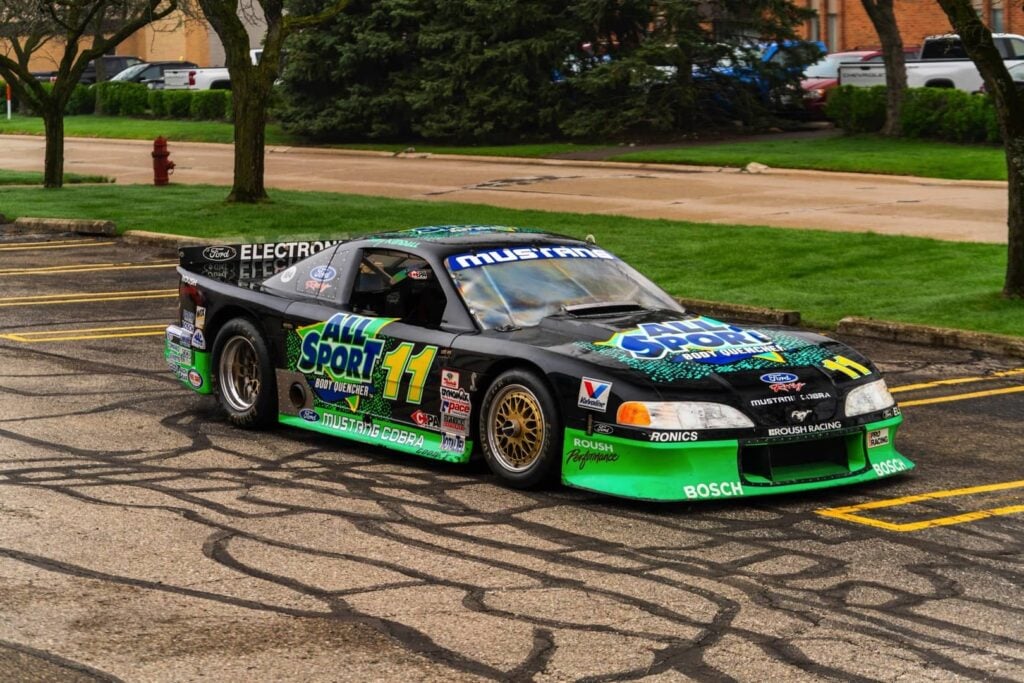
The next lot was another Roush-built Mustang, but its reputation rested on season-long dominance rather than a single endurance-racing victory. Tommy Kendall drove the Cobra to 11 consecutive wins during the 1997 SCCA Trans-Am season and secured the championship for Roush Racing.
That record, combined with direct association with both Kendall and Roush, elevated the car far beyond the value of an ordinary retired Trans-Am chassis. Its $825,000 price placed it third overall and only $110,000 behind the Newman-driven Daytona winner.
2020 Ford GT Mk II - $792,000
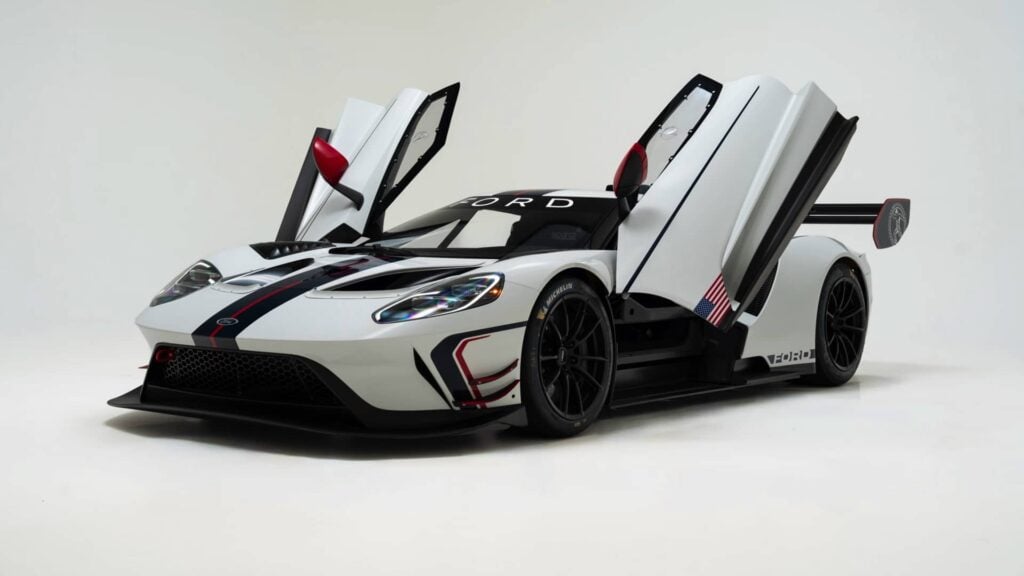
Ford and Multimatic created the GT Mk II as a track-only machine unconstrained by road-car homologation requirements or racing-series Balance of Performance rules. Its twin-turbocharged 3.5L EcoBoost V6 produces 700 horsepower, while fixed aerodynamic devices – including a large dual-element rear wing – help generate substantially more downforce than the street GT. Only 45 examples were planned, each carrying a $1.2 million starting price when new.
The Nashville car was No. 14 of those 45 and had covered only 96 miles. At $792,000, it led the three-car run of Ford GTs but sold below its original base price, an interesting result for one of Ford’s rarest modern track cars. Its appeal lies in its direct link to the second-generation GT program and the freedom its engineers had to pursue performance without conforming to a racing rulebook.
2005 Ford GT - $770,000
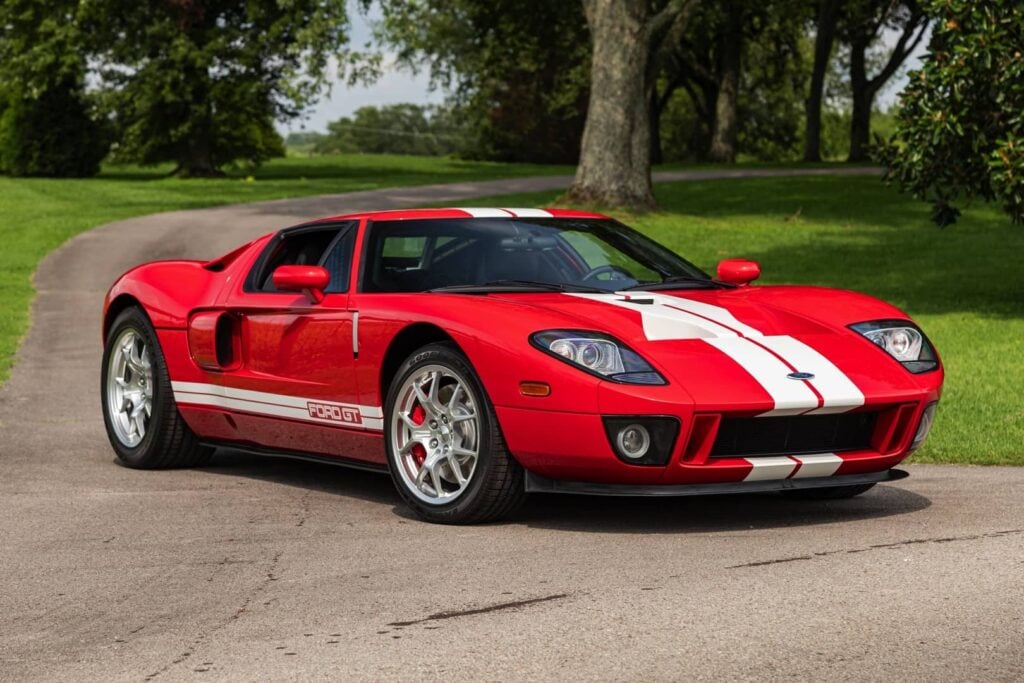
Developed as a modern tribute to the GT40 that gave Ford four consecutive Le Mans victories from 1966 through 1969, the 2005-06 Ford GT translated the original car’s proportions into a usable 21st-century supercar. Ford built 4,038 examples across the two model years, each powered by a supercharged 5.4L V8 rated at 550 horsepower and paired with a six-speed manual transmission.
The 2005 example sold in Nashville was finished in red and showed only 70 miles. Such extraordinarily low use made it less a used supercar than a preservation-grade time capsule, explaining why it finished only $22,000 behind the newer and far rarer GT Mk II. The $770,000 result also illustrates the premium collectors place on delivery-mile Ford GTs with analog controls, a manual gearbox and direct visual continuity with the GT40.
2006 Ford GT - $737,000
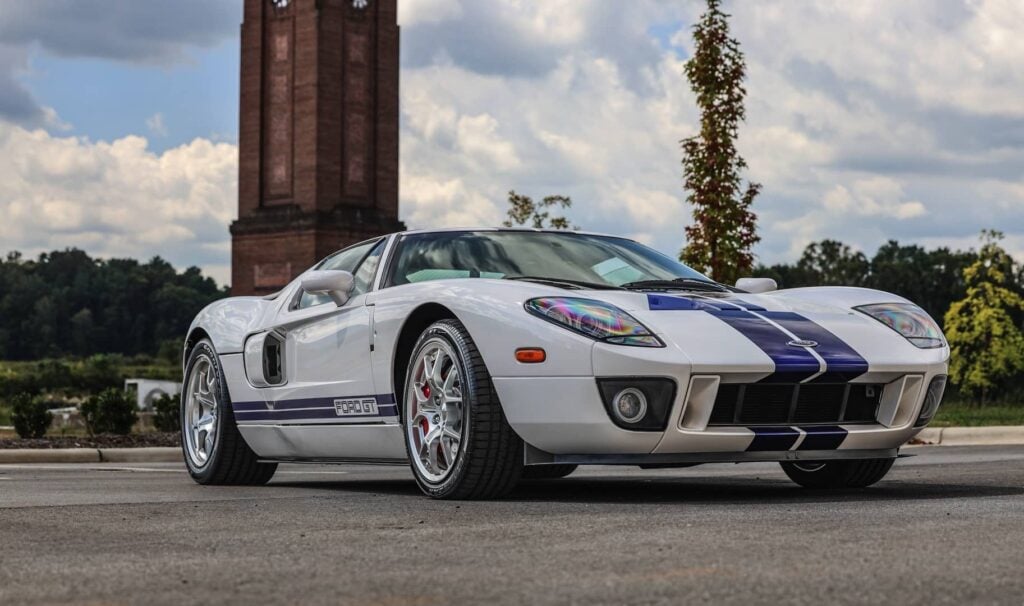
The 2006 Ford GT shared the same 550-horsepower supercharged V8, aluminum-intensive structure and six-speed manual transmission as the 2005 model. Across both model years, the GT combined a 205-mph top speed with styling that remained unmistakably connected to Ford’s 1960s Le Mans program.
Mecum’s Nashville example showed 1,276 miles, still exceptionally low but significantly more than the 70-mile 2005 car that preceded it. It sold for $737,000, a $33,000 discount to the lower-mileage 2005 example. Together, the two cars demonstrated how mileage can influence value even among similarly specified, highly collectible modern supercars.
1972 Chevrolet K5 Blazer Custom - $693,000
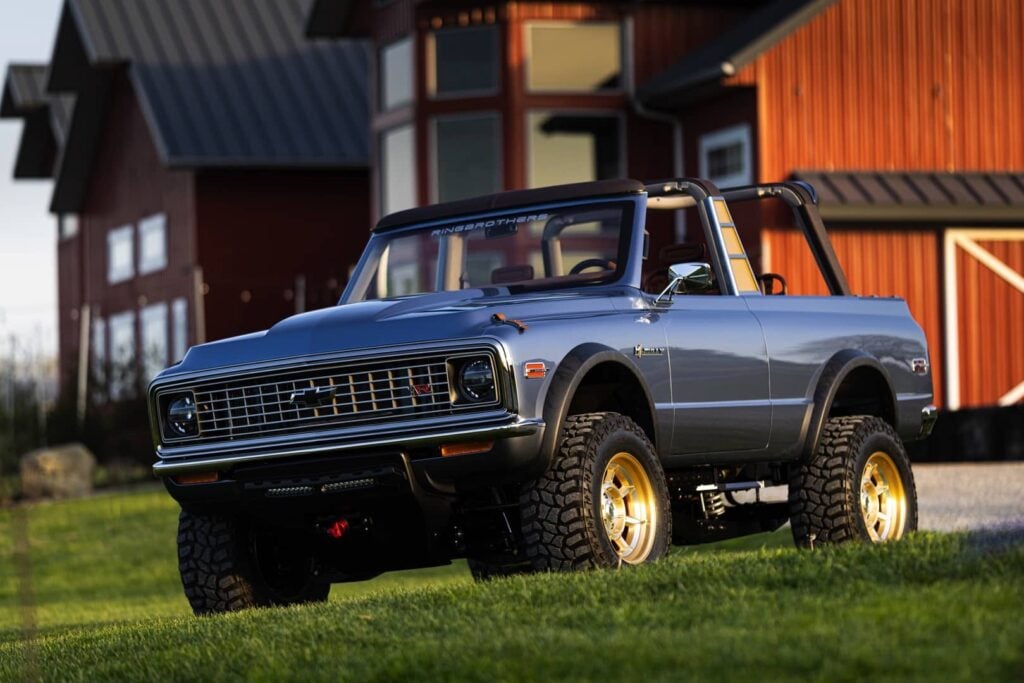
Chevrolet’s first-generation K5 Blazer has become one of the most desirable vintage American sport-utility vehicles, and “Bully” reinterpreted that simple open-air utility platform as an elite restomod. Ringbrothers completed the build in 2022 after more than 8,500 hours of work, mounting the body on a Roadster Shop chassis with custom off-road suspension.
Its Wegner Motorsports 416-cubic-inch LS3-based V8 uses a 2.9L Whipple supercharger to produce a claimed 1,160 horsepower, sent through a Bowler 4L80E automatic transmission. Baer brakes, 18-inch HRE Ringbrothers Edition wheels, Cooper off-road tires, a custom four-seat interior and Bashful Blue paint complete the build. With 1,032 miles showing, “Bully” sold for $693,000 and established an auction record for the K5 Blazer.
1969 Ford Mustang Boss 429 - $616,000
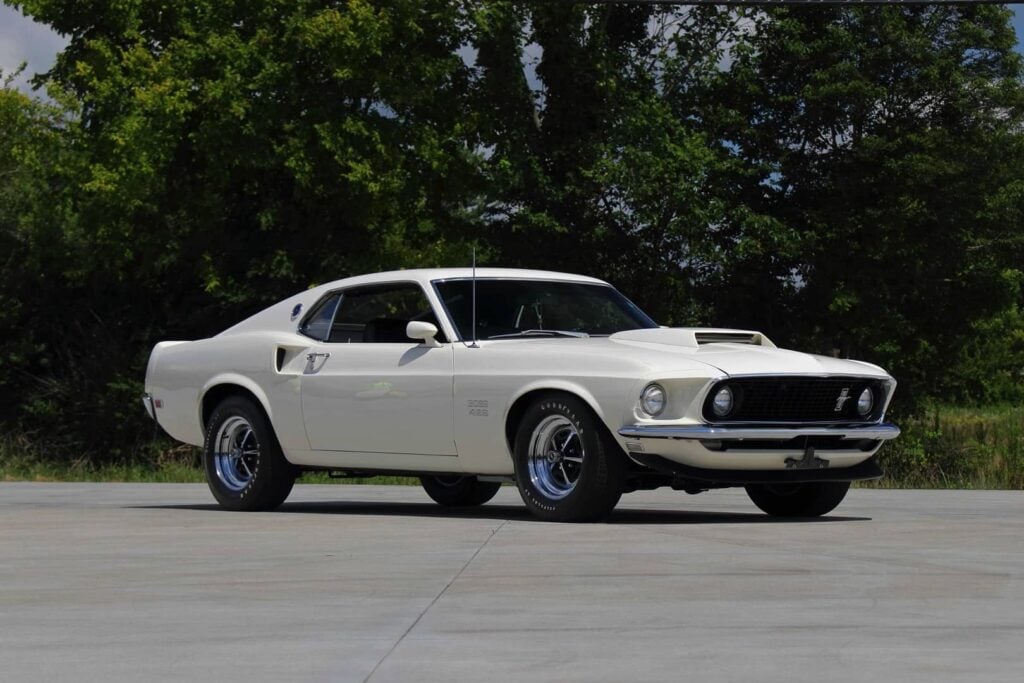
Ford created the Boss 429 Mustang to homologate its semi-hemispherical-head 429 V8 for NASCAR. Because the engine would not fit within a standard Mustang engine bay, Kar Kraft modified the cars by widening the shock-tower area and making other structural changes. Fewer than 900 examples were produced for 1969, and 1,359 were built across the two-year run.
In factory form, the Boss 429 used a 735-cfm Holley four-barrel carburetor, aluminum intake manifold, close-ratio four-speed manual transmission and competition-oriented running gear. Ford officially rated the engine at 375 horsepower, a figure long regarded as conservative. The Nashville fastback brought $616,000, placing it eighth overall and underscoring the model’s continuing status near the top of the blue-chip American muscle-car hierarchy.
1965 Aston Martin DB5 - $605,000
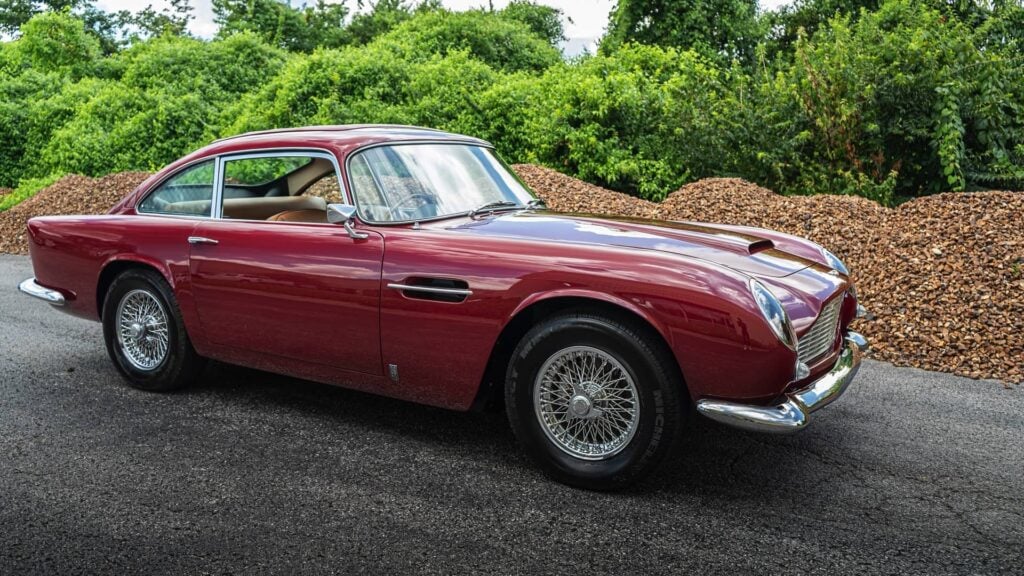
The DB5 evolved from Aston Martin’s DB4 and paired British grand-touring engineering with aluminum Superleggera coachwork licensed from Italy’s Carrozzeria Touring. Its 4.0L DOHC inline-six produced 282 horsepower in standard form, while a five-speed ZF manual transmission was available alongside a three-speed automatic. Aston Martin built fewer than 900 original DB5 saloons between 1963 and 1965.
The Nashville car, chassis DB5/2025/R, was distinguished by a rare factory sliding sunroof. That feature adds an unusual specification detail to a model already prized for its design, scarcity and famous association with James Bond’s Goldfinger. It sold for $605,000, making it the only British car and one of just three European models in the top ten.
2014 Ferrari 458 Spider - $533,500
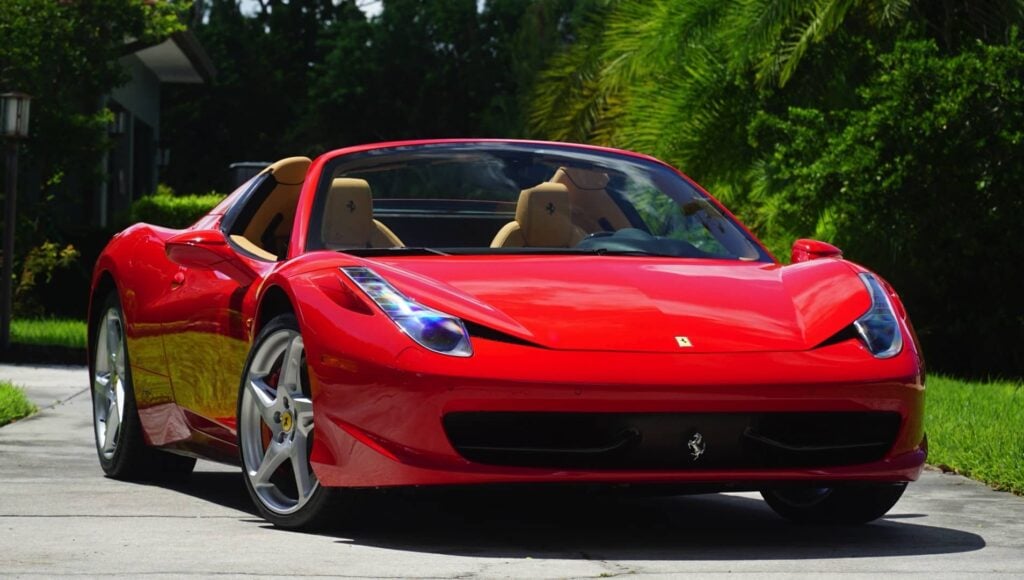
The 458 Spider adapted Ferrari’s mid-engine 458 Italia into an open car without resorting to a conventional fabric roof. Its aluminum retractable hardtop folds behind the seats, while the naturally aspirated 4.5L V8 produces 570 horsepower at 9,000 rpm and drives the rear wheels through a seven-speed dual-clutch transmission.
The Nashville example showed just 3,774 miles. As one of Ferrari’s final naturally aspirated mid-engine V8 road cars, the 458 Spider occupies an important position between the analog character of earlier Ferraris and the turbocharged models that followed. Its $533,500 result secured the final place in the top ten and gave Ferrari both the first and tenth positions in the ranking.
A Ford-Heavy Debut
Ford products claimed six of the ten positions and generated $4,675,000, or 44.3% of the top-ten total. Ferrari’s two cars generated $4,583,500, but nearly all of that came from the 812 Competizione Aperta. Chevrolet and Aston Martin supplied the remaining two entries.
The makeup of the Mecum Nashville results and docket showed the depth of the classic and collector car market. A nearly new limited-production Ferrari finished alongside historically important race cars, preserved modern supercars, a hand-built 1,160-horsepower custom SUV, a NASCAR-homologation Mustang and one of Britain’s most recognizable grand tourers. That variety – combined with more than $70 million in total sales and an approximately 74% sell-through rate – gave Mecum’s first Nashville collector car auction an unusually strong foundation for a new annual destination.
Next Up for Mecum
Following the Nashville collector car auction, Mecum’s next major stop will be its Dallas/Fort Worth sale, scheduled for October 21-24, 2026, at Dickies Arena in Fort Worth, Texas. The four-day collector car auction is expected to feature approximately 1,500 vehicles.
Early highlights include a 1971 Dodge Demon Custom known as “Demonic,” a 1971-style build completed by Dave Fansin in 2017 and displayed at that year’s SEMA Show. The radically reimagined Mopar reportedly uses a prototype supercharged 6.4L Demon V8 and represents more than 2,500 hours of work.
The Fort Worth docket also includes an exceptionally rare 1966 Chevrolet Corvette equipped with the N03 “Big Tank” option. Its 36.5-gallon fuel tank replaced the standard 20-gallon unit, and the car is documented as one of only two N03-equipped 1966 Corvettes exported to Canada. Chevrolet built just 66 N03 Corvettes for the model year.
At the opposite end of the Corvette timeline is a 2027 Chevrolet Corvette ZR1X 3LZ Convertible showing only 3 miles. Finished in Roswell Green Metallic over Jet Black, the one-of-one configuration pairs a 1,064-horsepower twin-turbocharged 5.5L LT7 V8 with a 186-horsepower front electric drive unit for a combined 1,250 horsepower and electrified all-wheel drive.