
Dodge Daytona History
Few automobiles in American automotive history carry the mythological weight of the 1969 Dodge Charger Daytona. Born from desperation on the NASCAR circuit and destined to become one of the most coveted muscle cars of the modern era, the Daytona’s story is equal parts engineering marvel, racing legend, and collector car treasure. Whether you’re actively searching for a Dodge Daytona for sale or simply tracking Dodge Daytona value trends, understanding the car’s origins is the essential first step.
Born to Win: The NASCAR Origins
By 1968, Dodge was losing the aerodynamics war on NASCAR’s high-speed superspeedways. Ford’s Talladega and Torino were slicing through the air with factory-optimized body shapes, leaving Chrysler’s boxy Charger models struggling. The answer came in the form of the Dodge Charger 500 – a somewhat improved Charger with a flush rear backlight – but it still wasn’t enough.
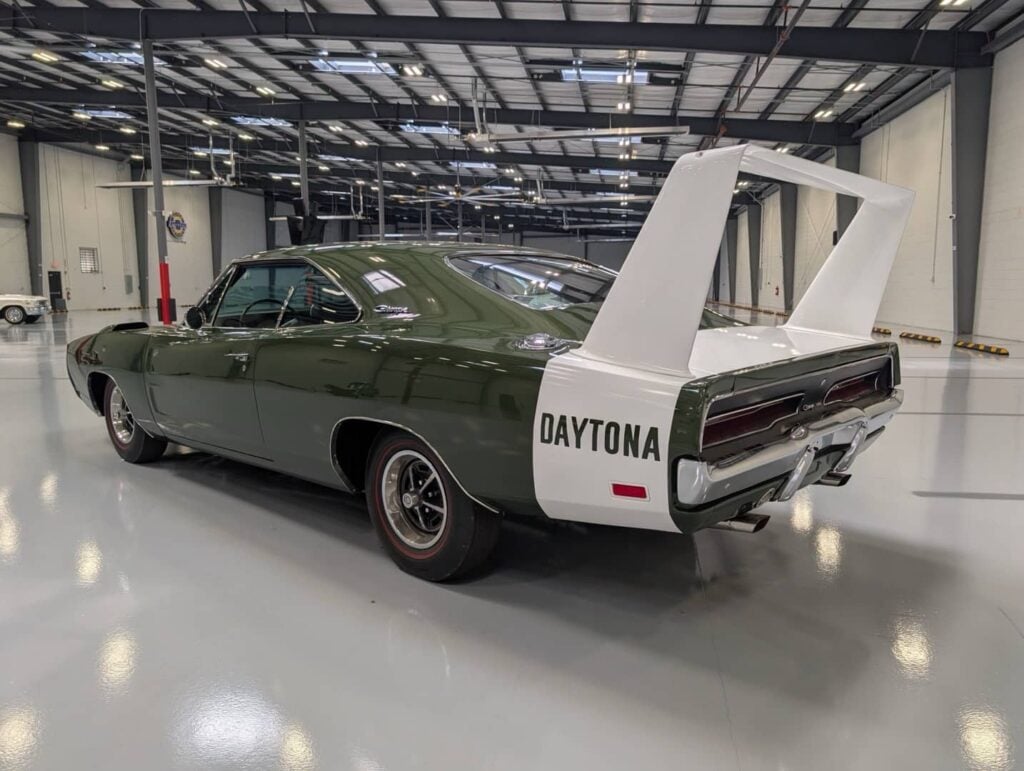
Dodge’s engineers went back to the drawing board and emerged with something radical: the 1969 Dodge Charger Daytona. Chrysler’s aerodynamics team bolted an 18-inch pointed nose cone onto the Charger’s front end and raised a towering 23-inch rear stabilizer wing – high enough, as legend has it, for a mechanic to stand beneath it – dramatically increasing both downforce and straight-line stability at racing speeds.
To legalize the car for NASCAR competition, Dodge was required to build a minimum of 500 road-going examples. The company delivered 503 street-legal Daytonas to dealerships in the summer of 1969, priced at approximately $3,860 each. History, of course, would be far kinder to these cars than the original buyers imagined.
The Racing Legacy
The Daytona made its competition debut at the inaugural Talladega 500 on September 14, 1969, with Richard Brickhouse piloting one to victory – a moment that announced the winged warrior’s arrival to the motorsports world. The car went on to win twice during the 1969 NASCAR season, and four more times in 1970.
The most unforgettable moment came on March 24, 1970, when Hall of Fame driver Buddy Baker turned a lap of 200.447 mph at Talladega Superspeedway in a Dodge Daytona – the first closed-course lap in motorsports history to break the 200 mph barrier. That single achievement cemented the Daytona’s place in racing immortality and gave collectors a story to tell for generations.
NASCAR responded to the Daytona’s dominance – and that of its sibling, the 1970 Plymouth Superbird – by restricting engine sizes for aero cars beginning in 1971, effectively ending the Winged Warriors era.
Under the Hood: Two Engines, Two Collector Tiers
The street-going Daytona came standard with the 440 cubic-inch Magnum V8, producing 375 horsepower, mated to either a three- or four-speed manual or TorqueFlite automatic transmission. This is the configuration found in the vast majority of surviving cars.
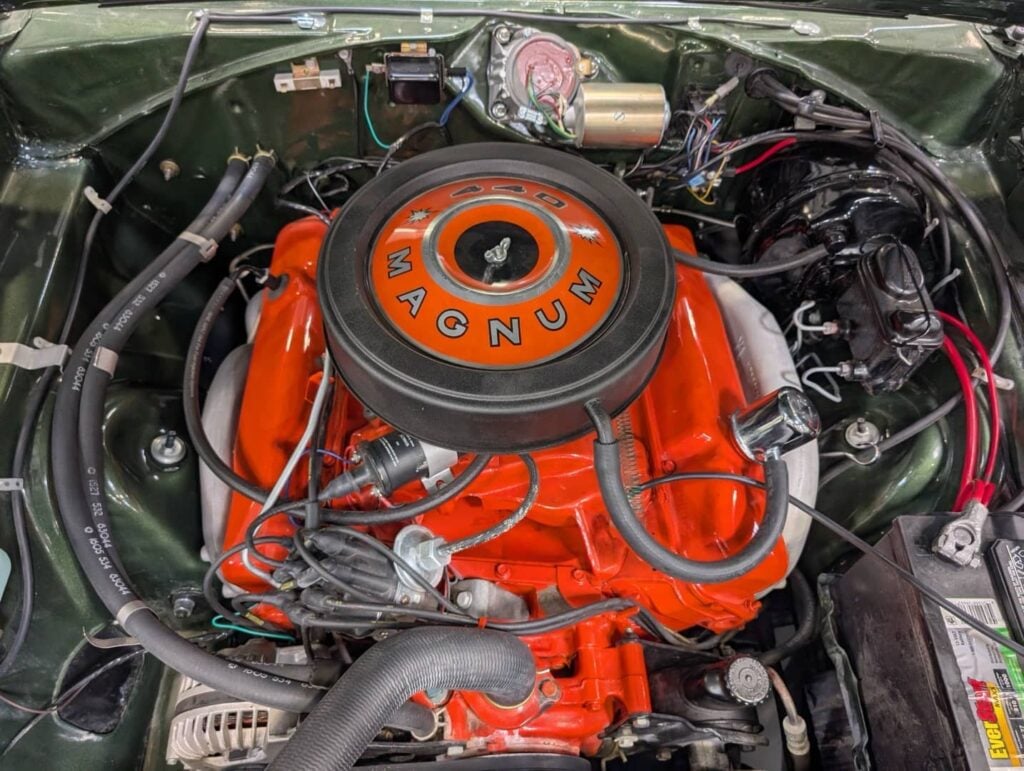
Far rarer – and far more valuable – are the 70 examples fitted with the optional 426 cubic-inch HEMI V8, rated at 425 horsepower. With only 70 HEMI Daytonas believed to have left the factory, these cars represent the absolute pinnacle of the muscle car collector world and command prices to match. Whether you’re shopping for a classic Dodge Daytona with the 440 or hunting a numbers-matching HEMI example, the engine choice defines the investment tier entirely.
The Second Generation: The 1984-1993 Dodge Daytona
While the 1969 model commands most of the spotlight, Dodge revived the Daytona nameplate in 1984 with a very different kind of car. The second-generation Dodge Daytona was a front-wheel-drive hatchback built on Chrysler’s G platform – a sporty, turbo-powered coupe that represented the brand’s embrace of modern performance technology. The top-spec Turbo Z variant featured a turbocharged 2.2L four-cylinder engine producing 142-146 horsepower and was recognized by Car and Driver as one of its Ten Best cars for the model year.
Sold through 1993, this generation found a loyal audience among buyers who wanted European-style sport coupe dynamics in an American package. Today, clean, low-mileage examples of the 1984-1986 Dodge Daytona Turbo Z are attracting renewed interest from collectors of 1980s performance cars – a niche segment that has quietly appreciated over the past decade.
Dodge Daytona Value: What the Market Is Telling Us
The Dodge Daytona collector car market has been nothing short of extraordinary in recent years. According to auction data, the average sale price for a 1969 Dodge Charger Daytona across all documented auctions now stands at approximately $508,000, with the median price hovering around $245,000.
Recent headline sales illustrate just how stratospheric top-tier examples can reach:
- August 2024: A highly original 1969 Dodge Hemi Daytona sold for a record $3,360,000 at auction, setting a new benchmark for the model.
- August 2025 (Mecum Monterey): Another example crossed the block at $1,320,000, demonstrating sustained demand at the seven-figure level.
For buyers seeking entry-level access to this market, well-documented 440 Magnum Daytonas in good-to-excellent restored condition typically sell in the $165,000-$325,000 range at major auction houses. Barn-find or project-grade examples can trade for less, while numbers-matching, frame-off restored cars with documented provenance push firmly into the high six figures.
HEMI-equipped examples are a different conversation entirely. Expect prices ranging from $700,000 to over $1,000,000 for clean, documented HEMI cars – and multiples of that for any example with significant racing or ownership provenance.
Dodge Daytona Coming to the Block: GAA Classic Cars, July 25, 2026
For collectors actively looking for a Dodge Daytona for sale right now, a compelling opportunity is on the horizon. GAA Classic Cars – the Greensboro, North Carolina-based auction house known for offering well-documented American muscle – will present a 1969 Dodge Charger Daytona at their July 23-25, 2026 sale, with the car scheduled to cross the block on July 25th.
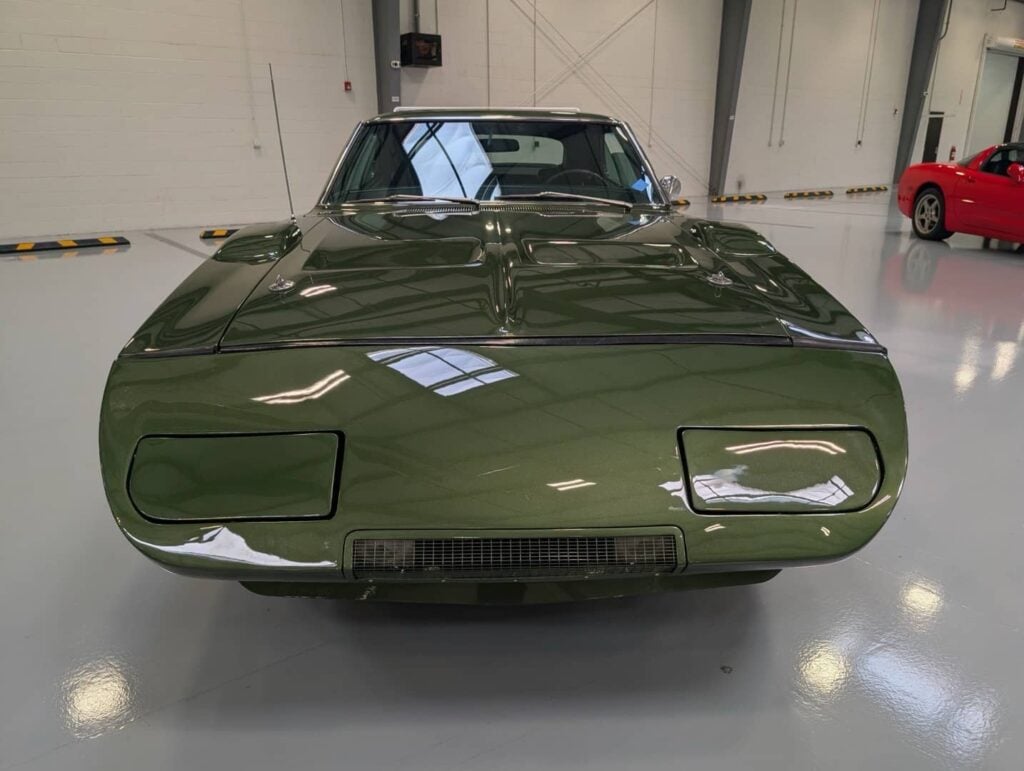
This particular example checks every box a serious buyer demands. It carries a matching-numbers 440 CID V8 – the factory-correct engine that powered the overwhelming majority of Daytonas built – and has accumulated just 119 miles since a full restoration. As one of only 503 produced, a numbers-matching, freshly restored Daytona with essentially no post-restoration use represents exactly the kind of turnkey opportunity that rarely surfaces in today’s market.
Given current Dodge Daytona value benchmarks for well-restored 440 examples, bidders should expect serious competition. This is the sort of car that sells once and disappears into a collection for decades.
Finding a Dodge Daytona for Sale Today
If you’re searching for a Dodge Daytona for sale, the major auction platforms – Mecum, Barrett-Jackson, RM Sotheby’s, and Hagerty/Broad Arrow – represent the most transparent marketplace for verified examples. Specialist dealers and marque-specific brokers also surface cars not destined for the auction block. Always insist on a full VIN decode and broadcast sheet verification, as the market for cloned or tribute Daytonas is very real given the car’s extraordinary value.
The Dodge Daytona remains one of the defining symbols of the American muscle car era – a car built purely to win, surviving in limited numbers, and appreciated by a generation of collectors who understand that history rarely comes with a more dramatic backstory. Whether as a driving investment or a piece of living motorsports heritage, the Daytona’s value shows no signs of losing altitude.